
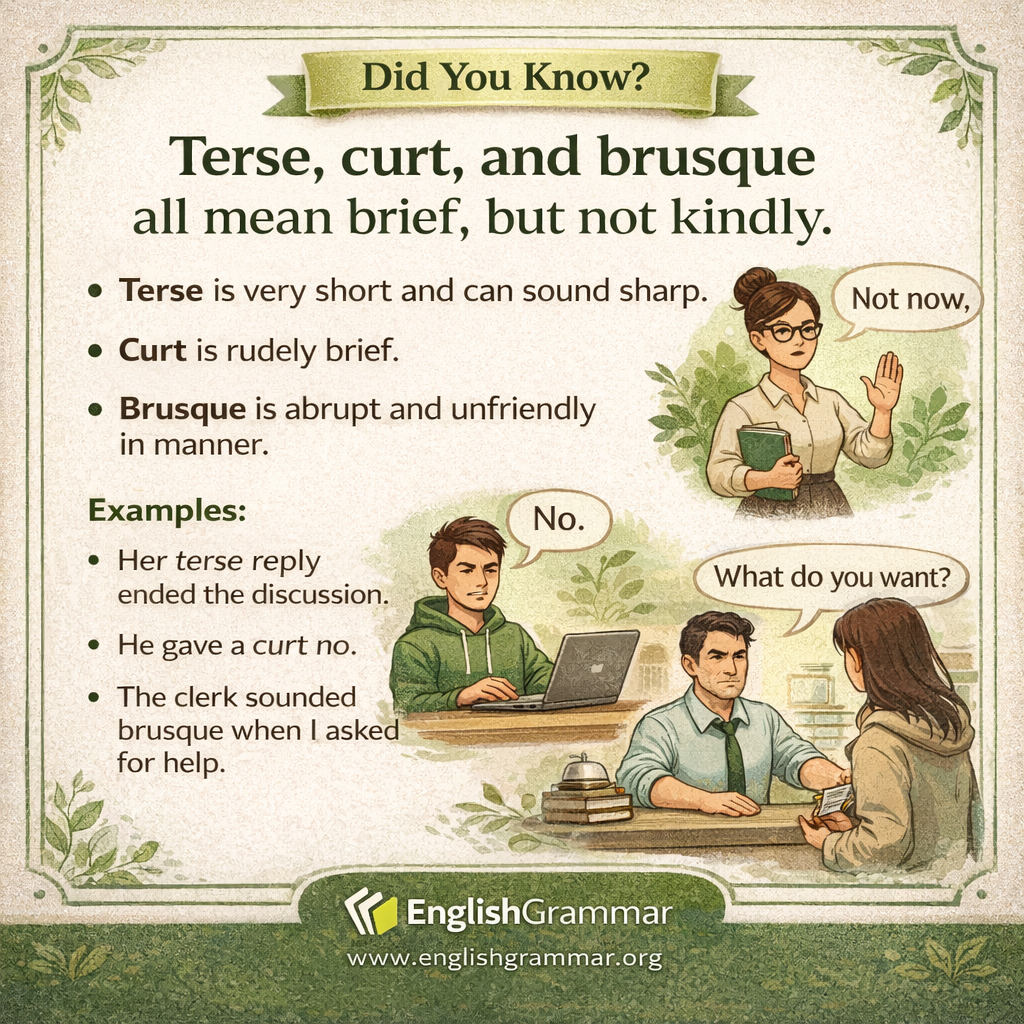
Terse, curt, and brusque all describe brief communication, but each adds a different negative tone.
Terse means very brief, often in a way that feels sharp, compressed, or lacking warmth. A terse message may not be openly rude, but it can sound cold. Example: Her terse email answered the question but offered no explanation.
Curt is stronger. It usually suggests rudeness as well as brevity. If someone gives a curt answer, they sound impatient or dismissive. Example: He gave a curt no and walked away.
Brusque focuses on manner. A brusque person is abrupt and unfriendly, often sounding as if they have no time for politeness. Example: The receptionist seemed brusque when I asked where to wait.
- Use terse for short, tight wording that may sound sharp.
- Use curt for brief speech that feels plainly rude.
- Use brusque for an abrupt, unfriendly style or tone.
If you want a neutral word, choose brief instead. These three usually suggest that the shortness feels unpleasant.
