
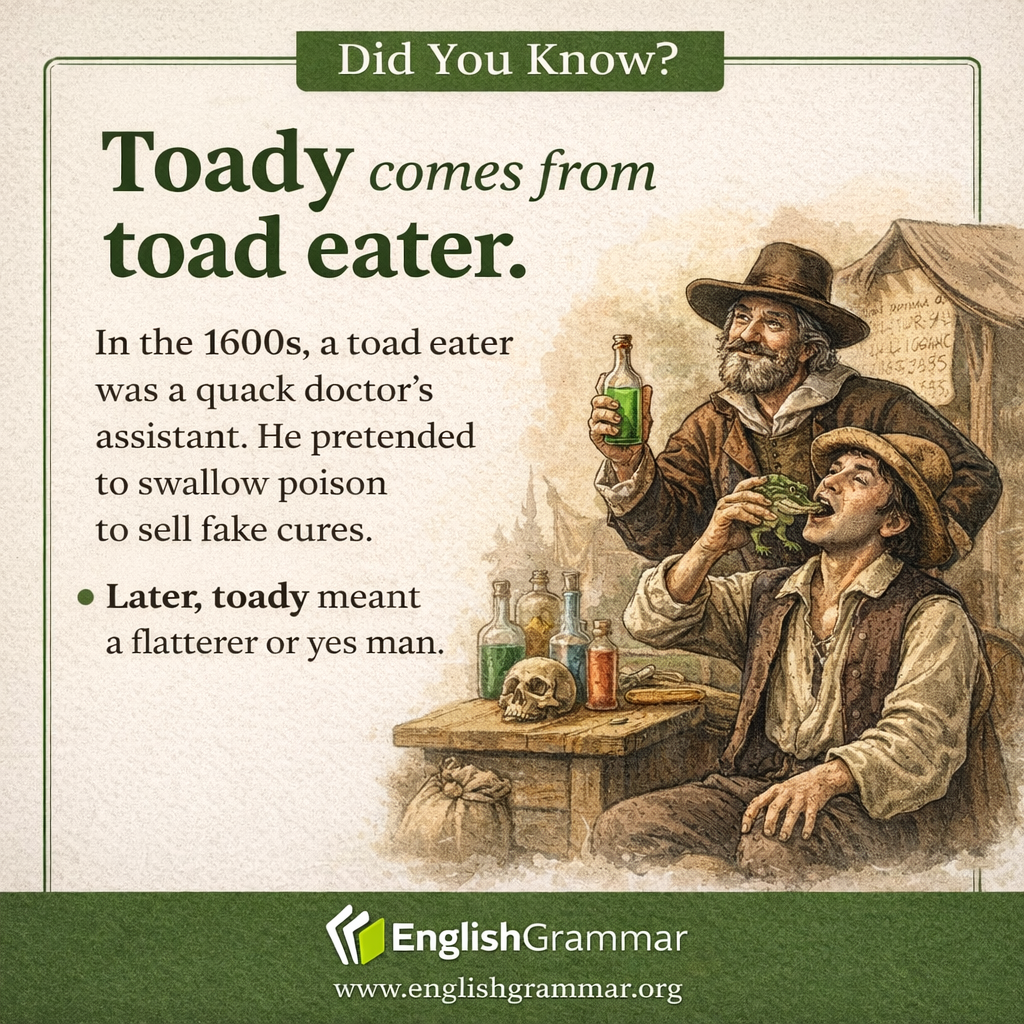
Toady originally comes from toad eater. In the 1600s and 1700s, a toad eater was the assistant of a quack doctor, meaning a seller of fake medical cures.
The assistant might pretend to swallow poison, or even a toad, and then appear to recover after taking the doctor’s supposed remedy. The performance was meant to impress a crowd and help sell the medicine.
Because this assistant publicly humbled himself to help the boss, the word gradually changed. By the 1800s, toady no longer referred to medicine shows. Instead, it meant someone who flatters, obeys, or agrees too eagerly in order to gain favor.
- Older sense: a toad eater helped a fake doctor sell cures.
- Later sense: a toady praises powerful people too much.
- Modern example: “He became a toady, always agreeing with the boss.”
So the modern idea of a toady comes from an older image of a person putting on a degrading act for someone else’s benefit.
