
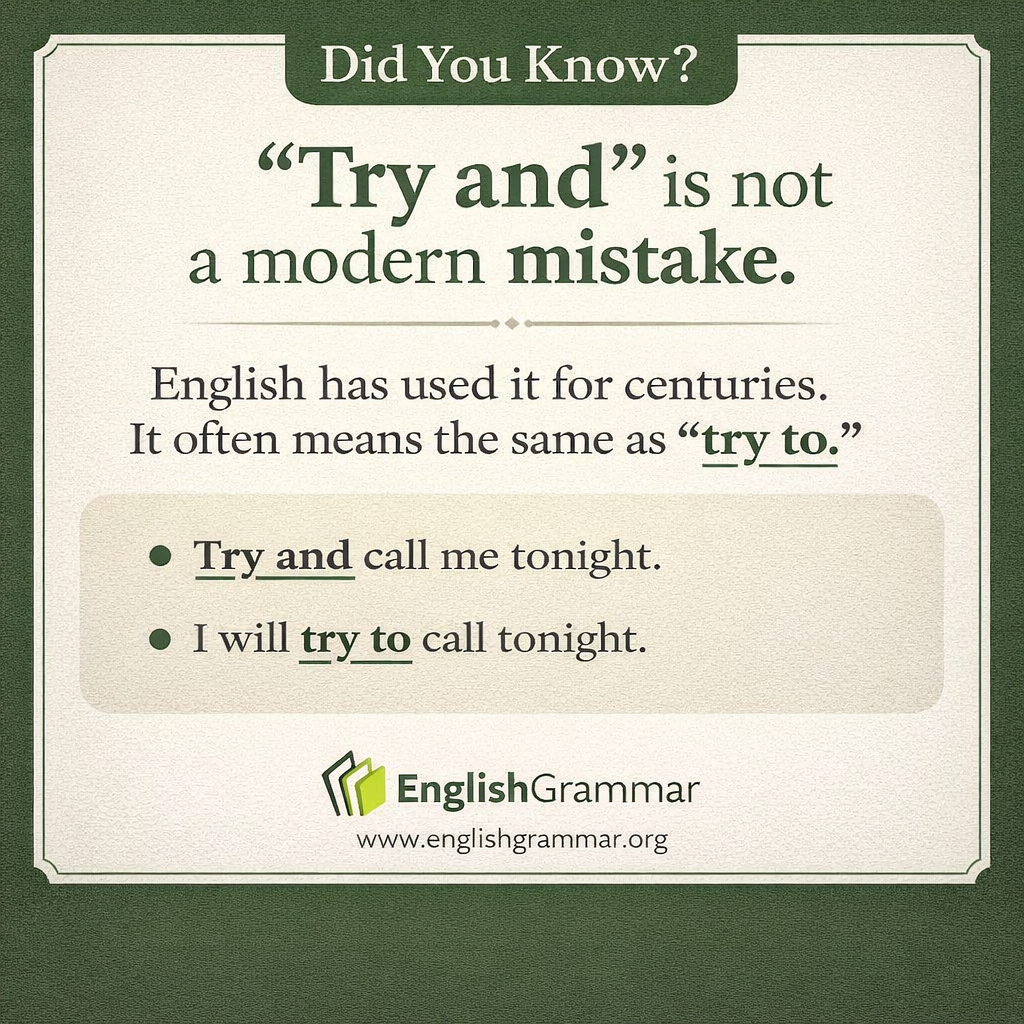
Many people are told that try and is wrong and that only try to is correct. That is not true. Try and has been used in English for centuries, and it appears in both speech and writing.
In many everyday sentences, try and and try to mean almost the same thing.
- Try and: I will try and finish today.
- Try to: I will try to finish today.
Both are standard. Many speakers use try and in informal, natural conversation because it sounds relaxed and familiar.
That said, try to can be more flexible in some contexts. It is often preferred in very formal writing, and it fits more easily after certain verb forms.
- She is trying to help.
- He tried to explain.
So the best lesson is simple: do not treat try and as a modern error. It is a long established part of English. Use try to when you want a more formal or more widely accepted option in every context.