
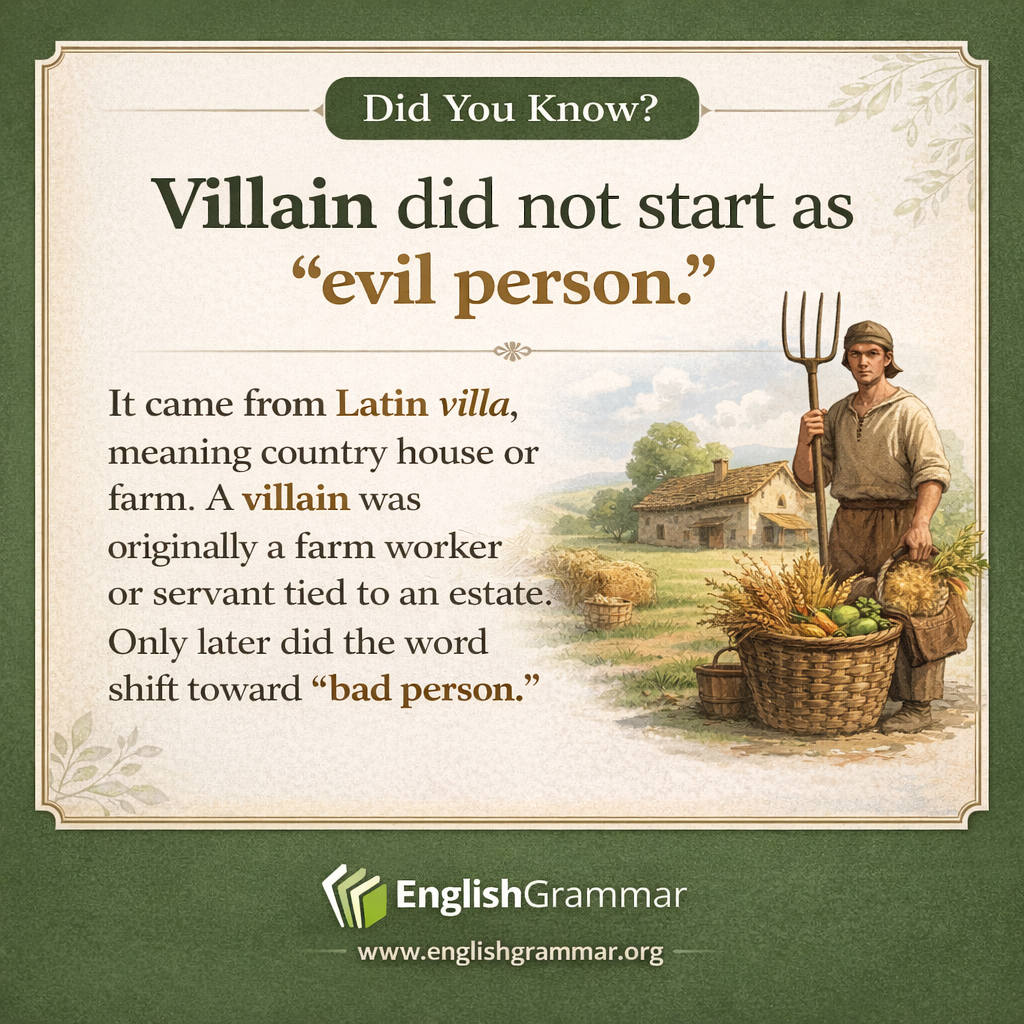
Villain did not originally mean an evil person. In earlier English, it referred to someone of low status who worked on a rural estate. The word came through Old French from Late Latin villanus, which meant a person attached to a villa, or country house and farm.
At first, the meaning was social, not moral. A villain was basically a farm worker, servant, or laborer connected to an estate. Over time, words for people of low rank often picked up insulting meanings. That social judgment helped push villain toward the sense of a rude, base, or dishonest person, and eventually to the modern meaning, a wicked character.
A short contrast makes the change clear:
- Earlier meaning: “a worker on a country estate”
- Later meaning: “a cruel or evil person”
This kind of shift is common in language history. A word can begin as a neutral label for a job or social class, then slowly take on a negative tone as attitudes change. Villain is a strong example of how a word’s history can be very different from its modern meaning.
