
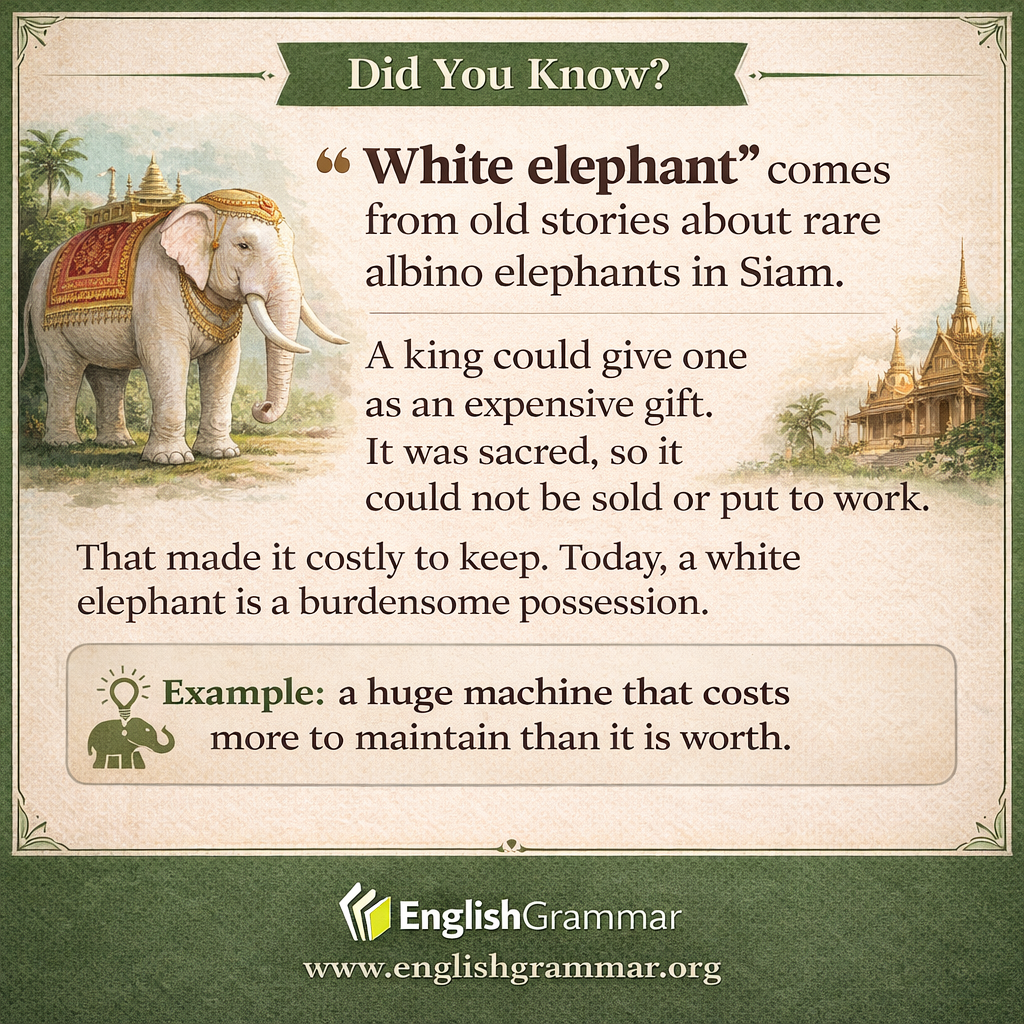
The phrase “white elephant” is commonly explained through stories about the kings of Siam, now Thailand. Rare albino elephants were seen as sacred and prestigious. According to the traditional story, a king could give one to a courtier he wanted to burden.
The problem was not that the animal was worthless. It was the opposite. Because it was sacred, the owner could not use it for ordinary labor, sell it, or get rid of it easily. But feeding and housing an elephant was extremely expensive. So the gift brought honor on the surface, but heavy cost in practice.
That idea shaped the modern meaning. Today, a white elephant is something that costs a lot to keep, maintain, or store while giving little practical benefit.
- A huge old boat that needs constant repairs.
- A fancy machine a company bought but rarely uses.
- A building project that is impressive but drains money.
The phrase is also behind the term white elephant sale, where people sell unwanted items, often for charity. In that setting, the items are usually not literally expensive to own, but they are things the owner no longer wants to keep.
