
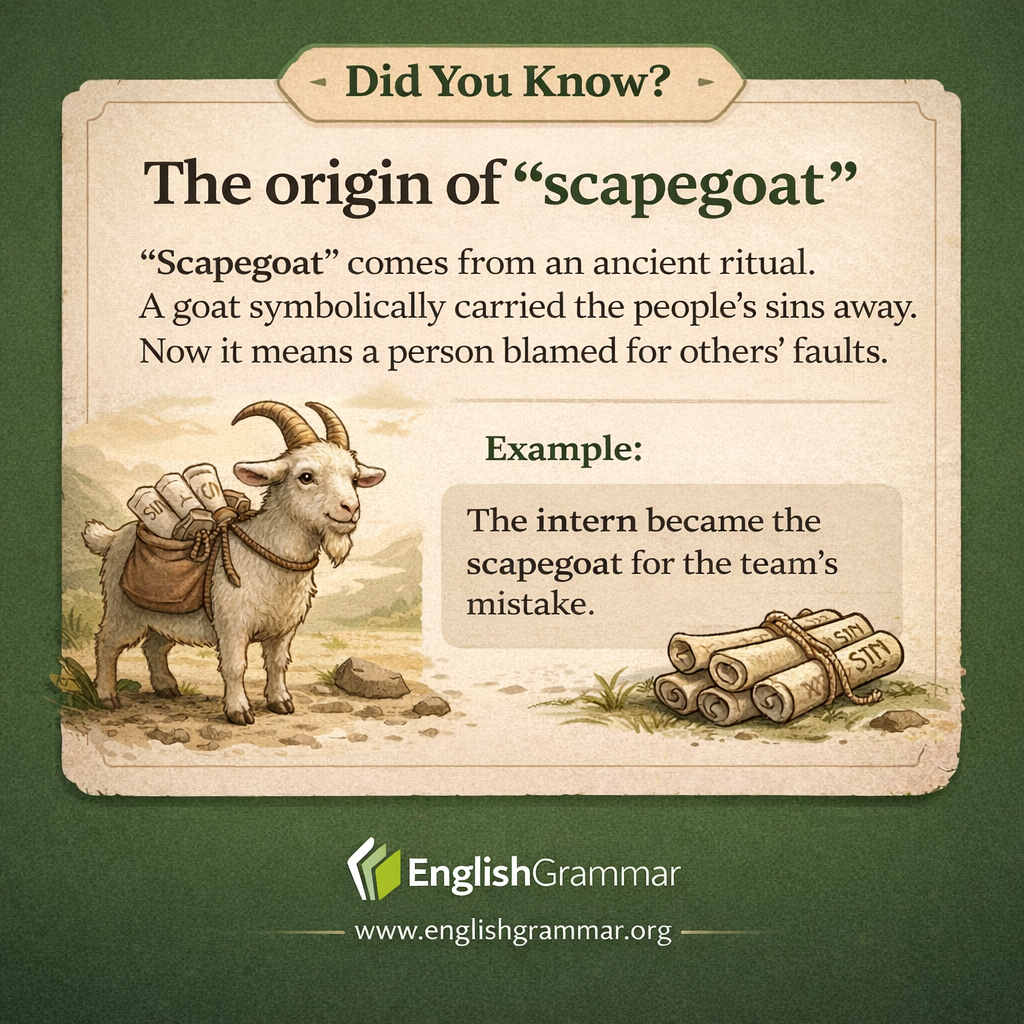
The word “scapegoat” has a striking origin. It comes from an ancient Jewish ritual described in the Bible, in which one goat was symbolically burdened with the people’s sins and then sent away into the wilderness. The idea was not that the goat had done anything wrong, but that it carried away guilt and wrongdoing.
In English, this image eventually became a figurative term. A scapegoat is now a person or group that gets blamed for problems they did not really cause, especially when others want to avoid responsibility.
For example, if a company fails because of poor planning by several managers, but one junior employee is blamed for everything, that employee becomes the scapegoat.
- Original sense: a goat symbolically sent away with the community’s sins
- Modern sense: a person unfairly blamed for others’ faults
- Common pattern: the real causes are more complex, but blame is placed on one easy target
This is why the word still feels powerful today. It connects unfair blame with an old image of guilt being placed on someone else and sent away.
