
• Skip to primary navigation
  • Skip to main content
  • Skip to primary sidebar
Home of English Grammar
  • Home
  • Course
  • Exercises
  • Grammar Rules
  • Matches
  • Posts
  • Tools
    • Grammar Checker
    • Very Replacer
    • Word Counter
  • Vocabulary Lists
  • Archives
    • Social Media Posts
    • Writing Guides
  • Sign in
  • Join free

Why the word tattoo comes from Polynesian languages

May 16, 2026

Tattoo comes from Polynesian

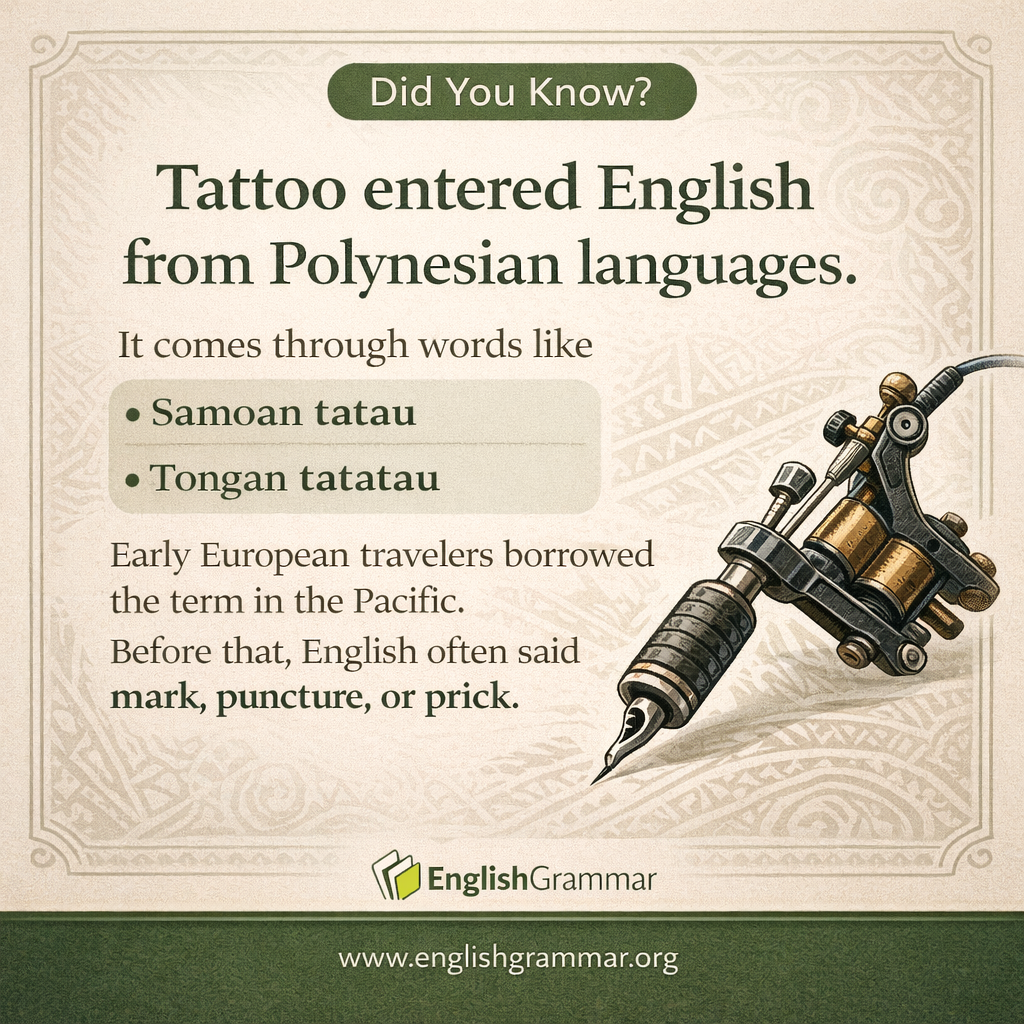
The English word tattoo comes from Polynesian languages, not from an older native English word. Scholars usually point to forms such as Samoan tatau and Tongan tatatau, which refer to the practice of marking the skin. European travelers encountered the word in the Pacific and brought it into English in the 1700s.

Before tattoo became common, English often described the idea more indirectly. Writers might use words such as mark, puncture, or prick instead of a single standard term. The borrowed Polynesian word gave English a clearer name for a practice that many Europeans were learning about through Pacific voyages.

A famous example is Captain James Cook’s published accounts, which helped spread the term in Britain. Over time, English spelling settled on tattoo, even though related Polynesian forms look a little different.

  • Samoan: tatau
  • Tongan: tatatau
  • English: tattoo

This is a good reminder that English vocabulary has many global sources. Some words entered through trade, some through science, and others, like tattoo, through cultural contact and travel.

Improve your English grammar, vocabulary and writing

We take you step by step from beginner to advanced, even if you struggled with English at school or have always had trouble remembering the rules.

  • 10 modules, 112 lessons and 730 questions
  • Just log in and learn anytime and anywhere
  • Your progress is saved in your account
  • Download the 2027 Grammar Guide (PDF)
Join free

Already have an account? Sign in

See what’s in the course

Primary Sidebar

2.4M760.9K165.9K

Free 2027 Grammar Guide

  • Download Grammar Guide (PDF)
  • Online grammar course, A1 to C2
  • Weekly exercises and vocabulary
  • Join over 3 million English learners

We respect your privacy. Unsubscribe anytime.

Already have an account? Sign in

Grammar Checker - Try Now

Latest Posts

  • 100 Best Synonyms for “Inappropriate” November 2, 2026
  • 100 Best Synonyms for “Unprecedented” November 2, 2026
  • Ample vs. plentiful vs. abundant vs. bountiful vs. copious vs. profuse November 2, 2026
  • 100 Best Synonyms for “Respectfully” November 2, 2026
  • Creepy, spooky, eerie, sinister, macabre, and bloodcurdling: What’s the difference? November 2, 2026
  • 100 Best Synonyms for “Improvement” November 2, 2026
  • 100 Best Synonyms for “Understood” November 2, 2026
  • Perspicacious vs. perspicuous: understanding the difference November 2, 2026
  • 100 Best Synonyms for “Resent” November 2, 2026
  • 100 Best Synonyms for “Heavenly” November 2, 2026
Home of English Grammar

Free English grammar exercises, rules and vocabulary lists, with new exercises every week. Join the leading English grammar site with over 3 million followers.

Join free

Learn

  • Exercises
  • Matches
  • Grammar rules
  • Vocabulary lists
  • Writing guides
  • Online tools

More

  • Top social media posts
  • Various posts
  • Contact

Account

  • Join free
  • Grammar Course
  • Free grammar guide (PDF)

Copyright © 2026 EnglishGrammar.org

  • Disclaimer
  • Privacy policy
  • Terms
  • Sitemap