
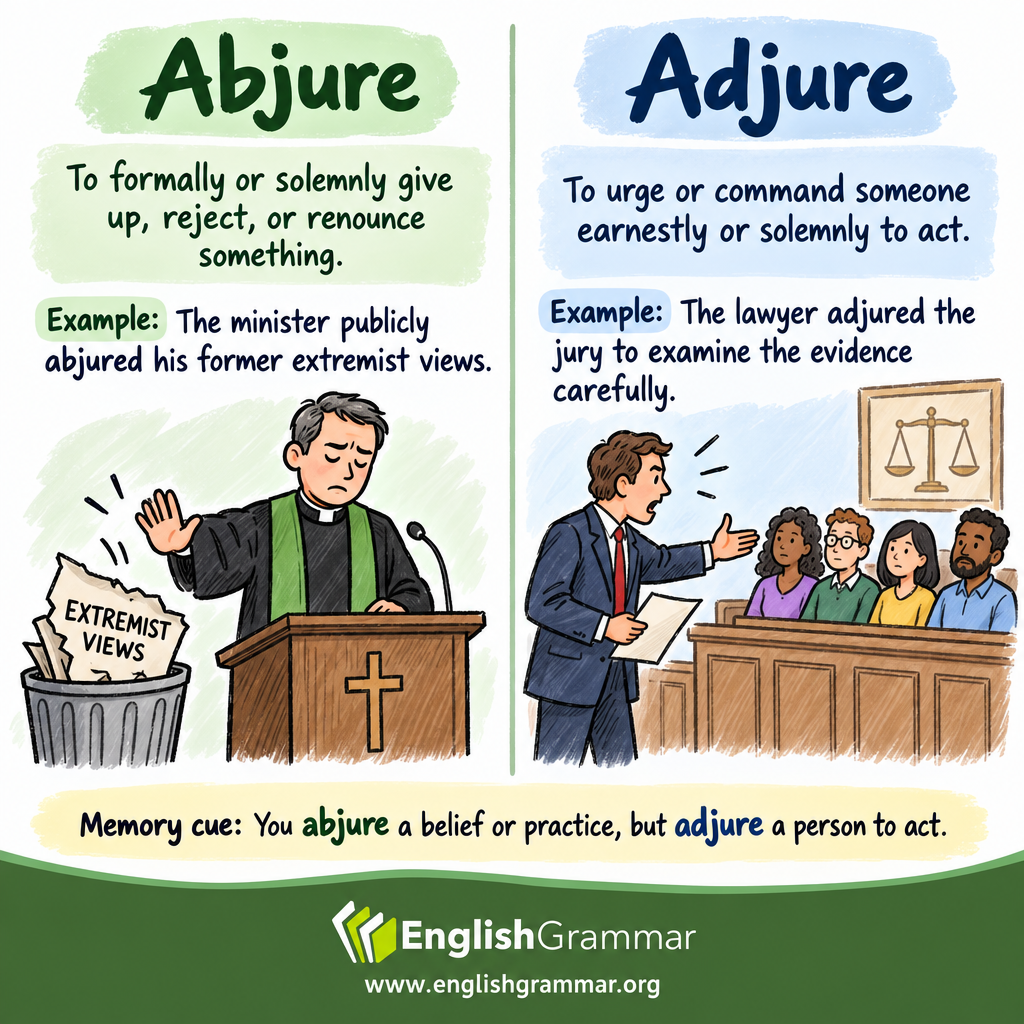
Abjure and adjure look similar, but they describe different actions. Both are formal words, so they appear more often in serious writing, legal contexts, speeches, and historical or literary texts than in everyday conversation.
Abjure means to formally or solemnly give something up or reject it. Its object is usually a belief, claim, practice, allegiance, or course of action. A person might abjure violence, renounce a political doctrine, or reject a former position publicly.
- After leaving the organization, Mara abjured its discriminatory beliefs.
- The ruler refused to abjure his claim to the territory.
Adjure means to urge, appeal to, or command someone earnestly or solemnly. It commonly follows the pattern adjure someone to do something. The word can suggest moral authority, duty, or the seriousness of the situation.
- The doctor adjured the residents to remain indoors during the storm.
- She adjured her colleagues to consider the consequences before voting.
The sentence structure can help you choose. With abjure, someone rejects a thing: “They abjured the practice.” With adjure, someone strongly calls on a person to act: “They adjured the council to intervene.” In less formal contexts, renounce or reject can replace abjure, while urge or implore can often replace adjure.