
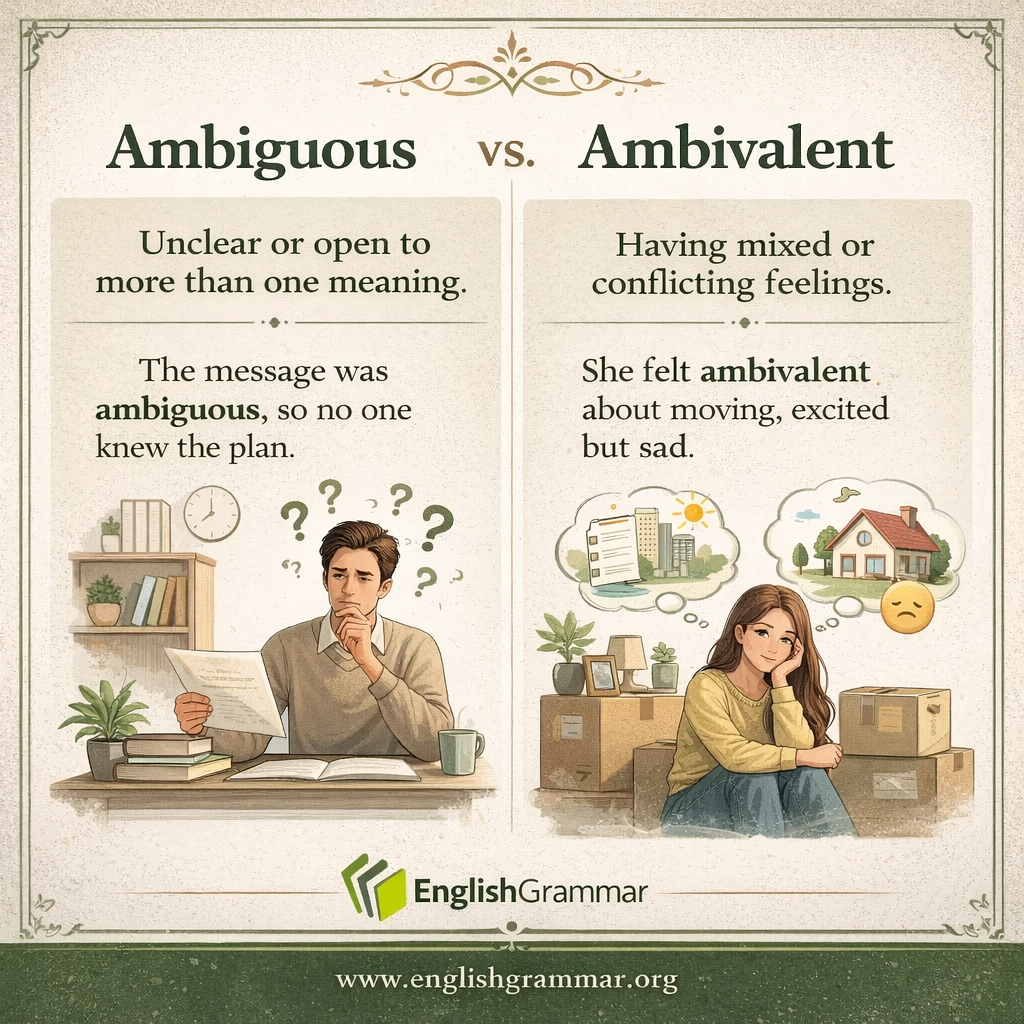
Ambiguous and ambivalent look similar, but they describe different things.
Ambiguous means unclear, uncertain, or open to more than one interpretation. Use it when meaning is not definite. A statement, instruction, or answer can be ambiguous. For example, The email was ambiguous, so the team did not know which deadline mattered.
Ambivalent means having mixed or conflicting feelings. Use it for emotions, not for unclear wording. A person can feel ambivalent about a decision, a change, or a relationship. For example, He felt ambivalent about the promotion because it brought both pride and stress.
A quick way to remember the contrast is this: ambiguous is about meaning, while ambivalent is about feelings.
- If the problem is unclear language, choose ambiguous.
- If the problem is mixed emotions, choose ambivalent.
So if a message can be read in two ways, it is ambiguous. If you both want and do not want something, you are ambivalent.
