
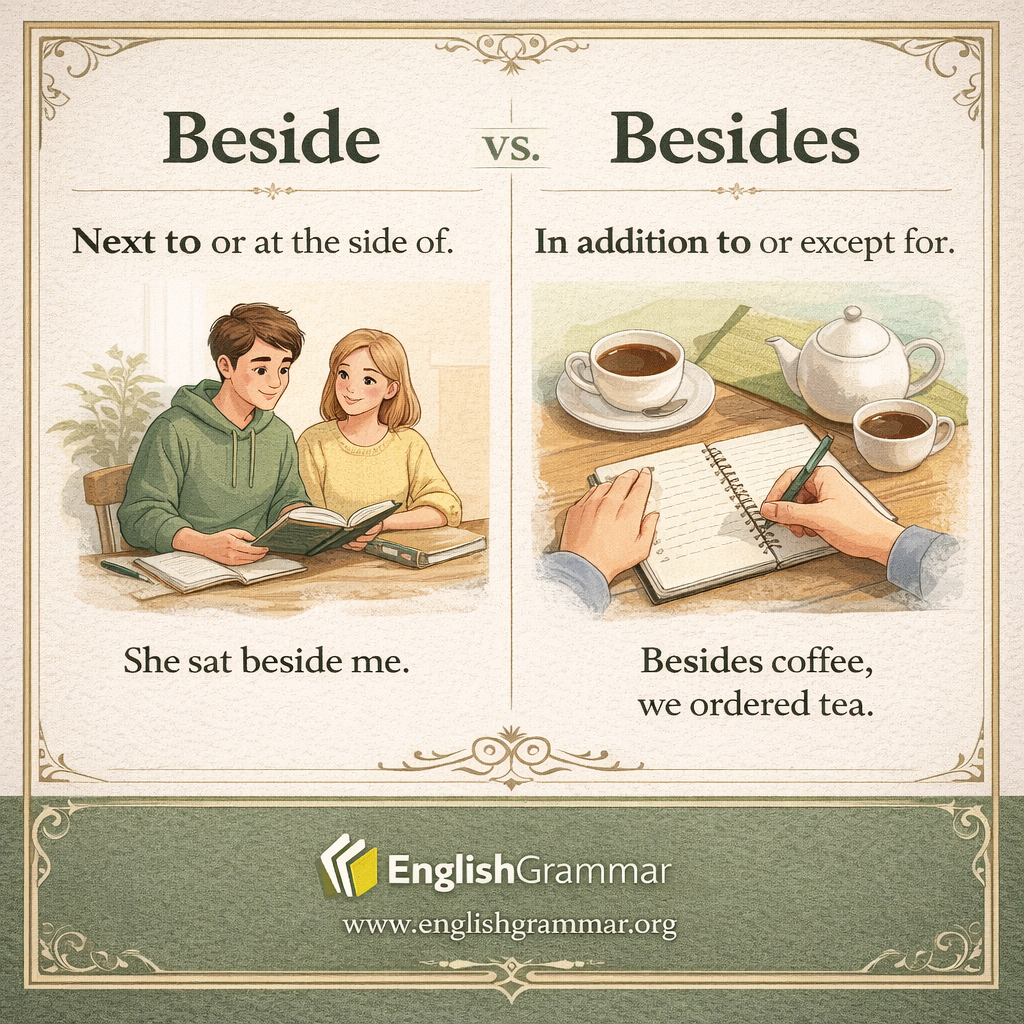
Beside and besides look almost the same, but they do different jobs.
Beside usually means next to or at the side of. It describes position. Example: The lamp stood beside the bed.
Besides usually means in addition to or sometimes except for. It adds something extra or limits a group. Example: Besides math, she studies history. Another example is No one besides Jake knew the answer.
A simple way to remember the difference is this: if you are talking about place, use beside. If you are adding information or meaning except for, use besides.
- Place: The dog lay beside the chair.
- Addition: Besides dessert, we ordered coffee.
- Exception: No one besides Maya arrived on time.
Writers sometimes confuse them because they differ by only one letter. Checking the meaning of the sentence usually solves the problem quickly.
