
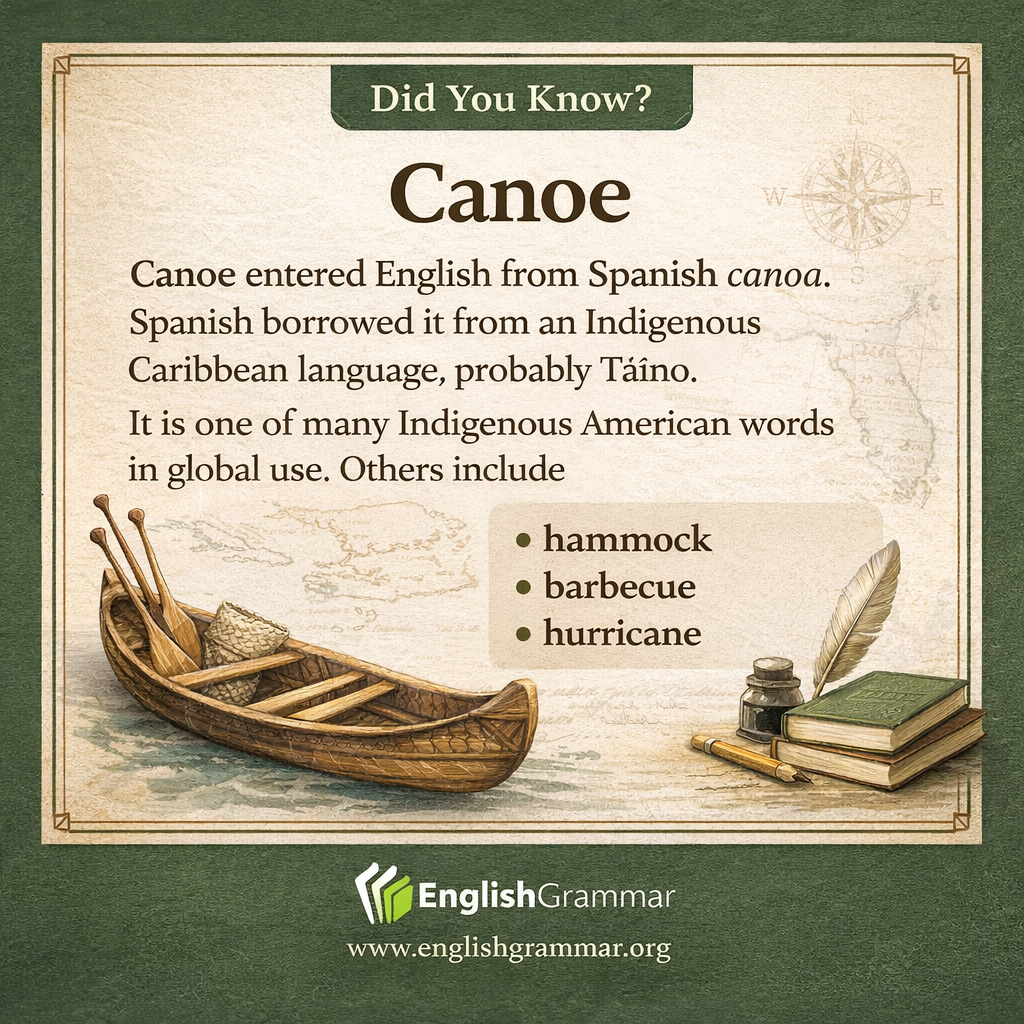
The English word canoe did not begin in English or even in Europe. It came into English through the Spanish word canoa. Spanish speakers had borrowed that word in the Caribbean from an Indigenous language, most often identified as Taíno, though exact early language attribution can be difficult in colonial records.
This is a good reminder that many everyday English words have Indigenous American roots. European explorers, traders, and colonists often adopted local words for plants, foods, tools, and objects that were new to them. Those borrowed words then spread into Spanish, French, English, and other languages.
- canoe: from Spanish canoa, from an Indigenous Caribbean source
- hammock: from Caribbean Indigenous languages, through Spanish
- barbecue: from a Caribbean Indigenous source, through Spanish
- hurricane: from a Caribbean Indigenous source, through Spanish
So when we say canoe, we are using a word with a long travel history: Indigenous Caribbean language to Spanish to English. The path of the word shows how language records contact, exchange, and power across regions and centuries.
