
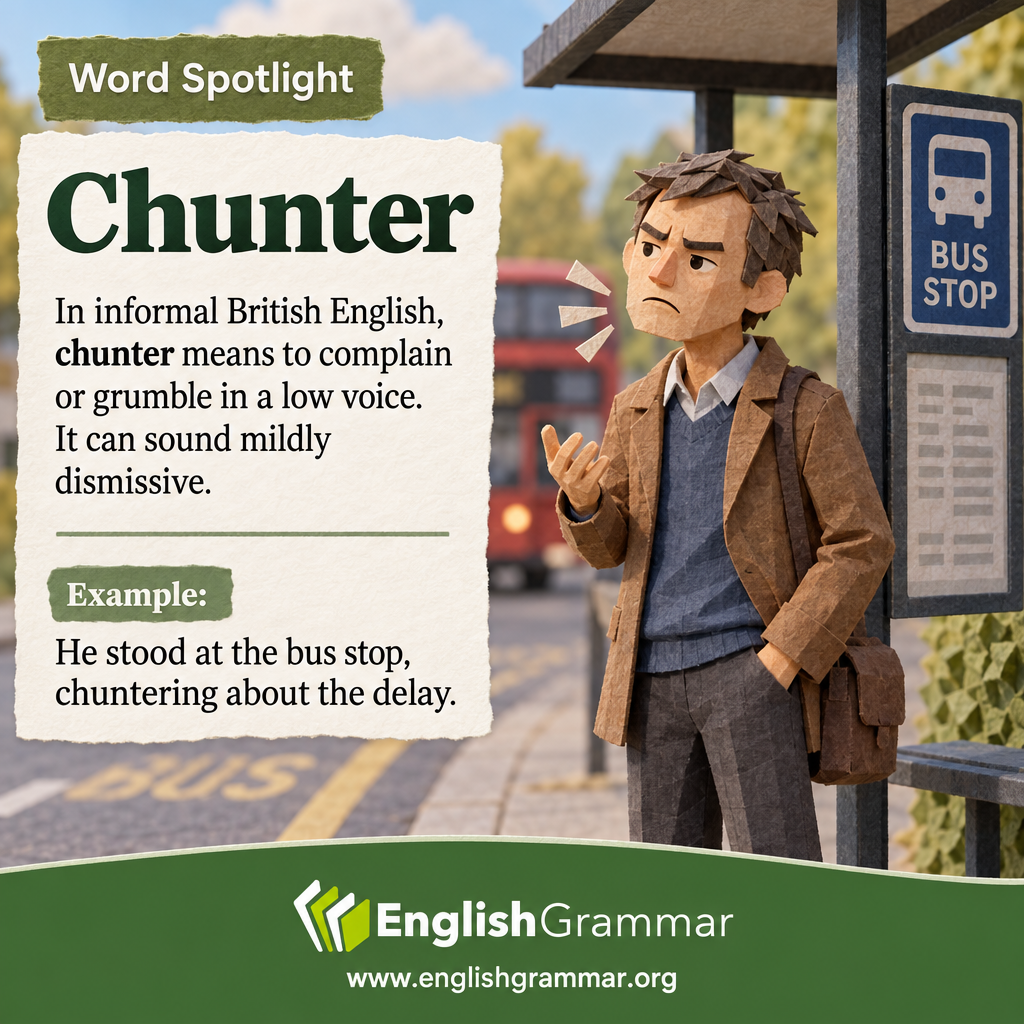
Some complaints are loud and direct. Others come out as a stream of quiet, irritated remarks. In informal British English, chunter is a useful word for that second kind of complaining: grumbling or muttering in a low voice.
Imagine someone waiting for a bus that is already twenty minutes late. They are not shouting at anyone, but you can hear little complaints beside you. You could say: He stood at the bus stop, chuntering about the delay. The word suggests how he sounds, not just what he is saying.
Chunter often appears with words that show the subject of the complaint or suggest that it continues:
- Chunter about something: She was chuntering about the price of the tickets. Here, about introduces what annoys her.
- Chunter on about something: He kept chuntering on about the parking charges. Adding on suggests that the complaints continue.
The tone matters. Describing someone as chuntering can sound mildly dismissive, as though their complaints are becoming tiresome. It may suit a light story about a friend or family member, but it is less suitable when you want to take someone’s concerns seriously.
For a neutral description, use complain. To describe quiet speech without suggesting annoyance, use mutter. Choose chunter when you want the informal British flavour and the sense of low-voiced grumbling together.
