
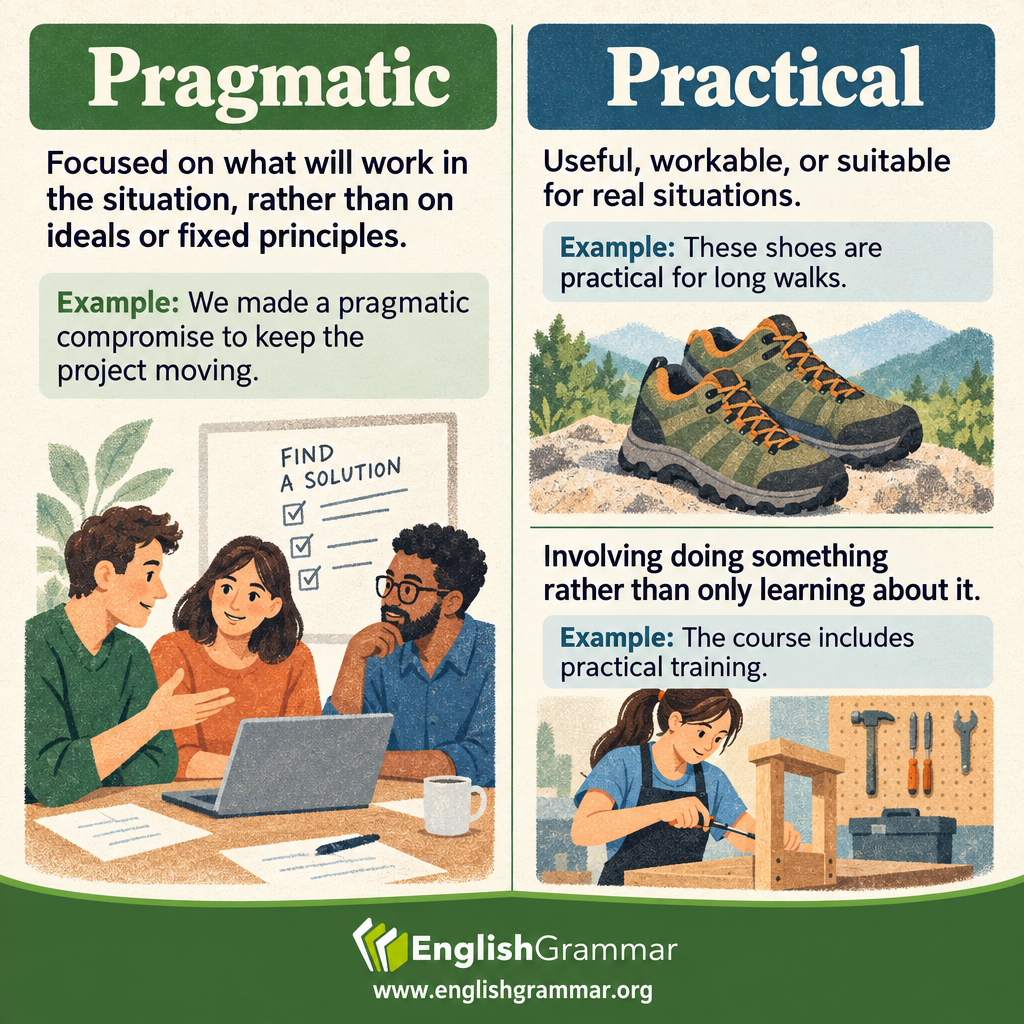
Pragmatic and practical both connect with what works in real life. They often overlap, but they usually emphasize different things.
Pragmatic describes an approach that focuses on results in the actual situation rather than strictly following ideals or fixed principles. It often describes people, decisions, compromises, and ways of solving problems.
- They took a pragmatic approach and repaired the old equipment instead of waiting for replacements.
- Accepting a smaller office was a pragmatic decision that reduced our costs.
The emphasis is on adapting to circumstances. This does not necessarily mean ignoring ethics or caring only about money.
Practical often means useful, workable, or suitable for everyday needs. It commonly describes objects, advice, plans, and solutions.
- A backpack is more practical than a suitcase for this hiking trip.
- She gave me practical advice about finding affordable housing.
It can also describe learning or experience that involves doing something, not just studying ideas: The workshop gives students practical experience with basic repairs.
Sometimes either word fits. A pragmatic solution emphasizes accepting what can work under the circumstances; a practical solution emphasizes that the solution is usable or workable. The distinction is a difference in emphasis, not a strict boundary. When describing hands-on training or an everyday item’s usefulness, however, practical is usually the natural choice.