
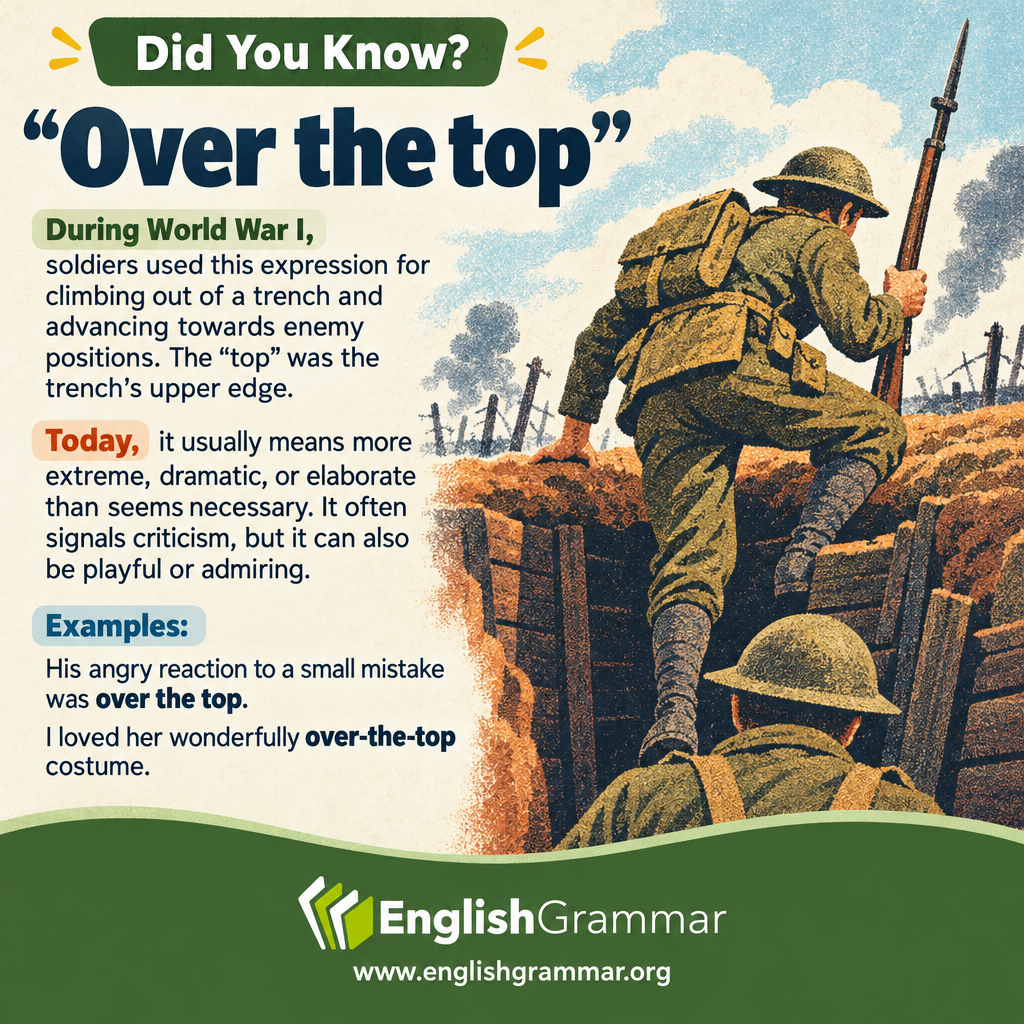
“Over the top” has a well-known connection to World War I trench warfare. Soldiers used it to describe climbing out of a trench and advancing towards enemy positions. The “top” was the upper edge of the trench: going over it meant leaving its protection and entering exposed ground.
This military use is an important part of the expression’s history, but the wording also has ordinary literal uses. Something can physically go over the top of a wall, for example. Not every use refers to warfare.
Today, the familiar figurative meaning is more extreme, dramatic, or elaborate than seems necessary or reasonable. We use it for things such as reactions, performances, clothes, celebrations, and spending.
- His angry response to a small mistake was over the top.
- They hired a helicopter for their wedding entrance, which seemed a bit over the top.
The expression often suggests criticism, but it can also be playful or admiring. If someone enjoys a wildly theatrical outfit, calling it over the top may express delight rather than disapproval. The speaker’s tone and the situation matter.
Notice the spelling before a noun: we normally add hyphens, as in an over-the-top performance. After a verb, we normally leave the words separate: The performance was over the top.