
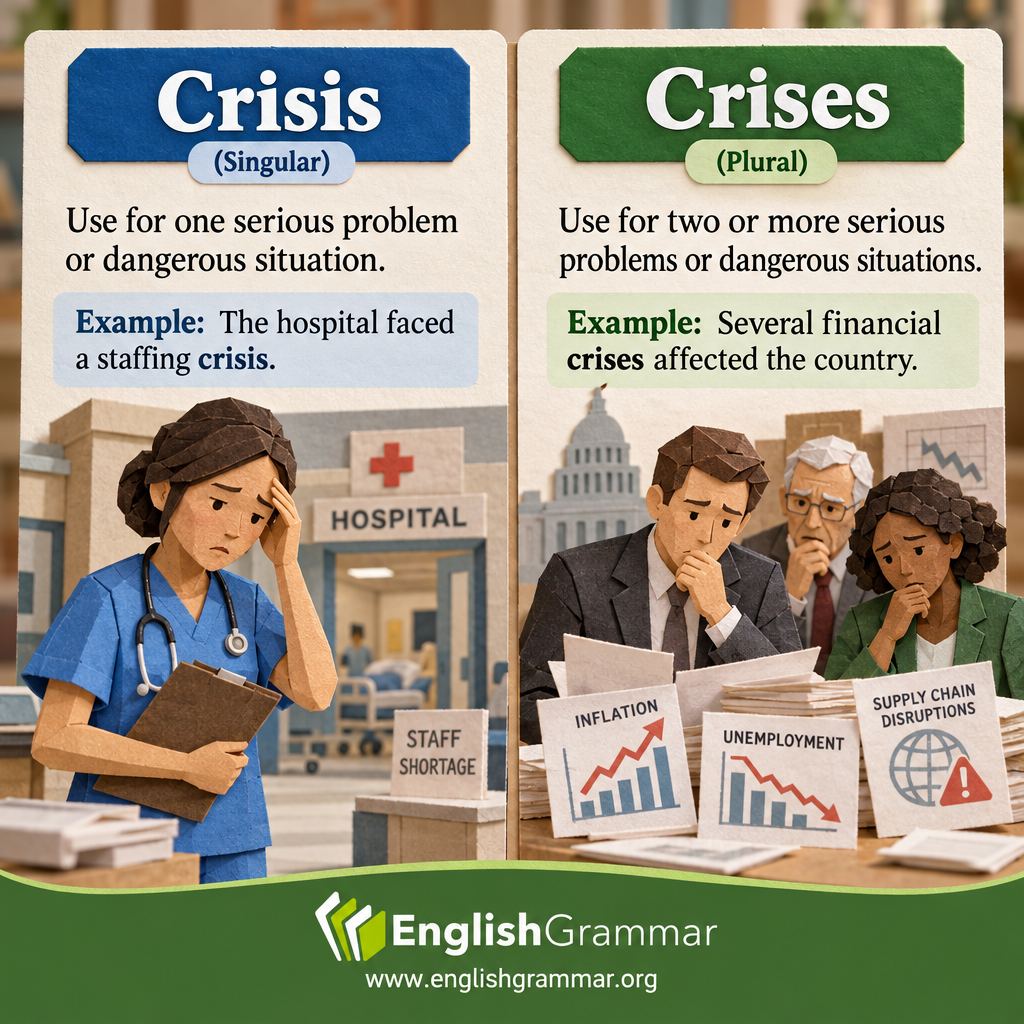
Crisis and crises describe serious problems or dangerous situations. The difference is number: crisis is singular, meaning one, while crises is plural, meaning two or more.
Use crisis when you mean one situation that needs urgent attention. You can put a before it, or use words such as the or this.
- The school is dealing with a funding crisis.
- This crisis requires a quick response.
Use crises when you mean multiple situations. Words such as several, many, and these often help show that a plural form is needed.
- The region experienced several water crises over the years.
- These crises have disrupted daily life.
The number of people affected does not decide which form to use. One crisis can affect thousands of people. Likewise, a very serious situation is not automatically plural: use the singular if you are describing it as one crisis.
The pronunciation changes too. Crisis sounds like “KRY-sis,” while crises sounds like “KRY-seez.” The plural ends with a “z” sound, not an “s” sound.
Watch the verb when the noun is the subject: “The crisis is getting worse,” but “The crises are getting worse.” Do not write crisises. Unlike many English nouns, this word does not form its plural by simply adding -s or -es to the singular.
