
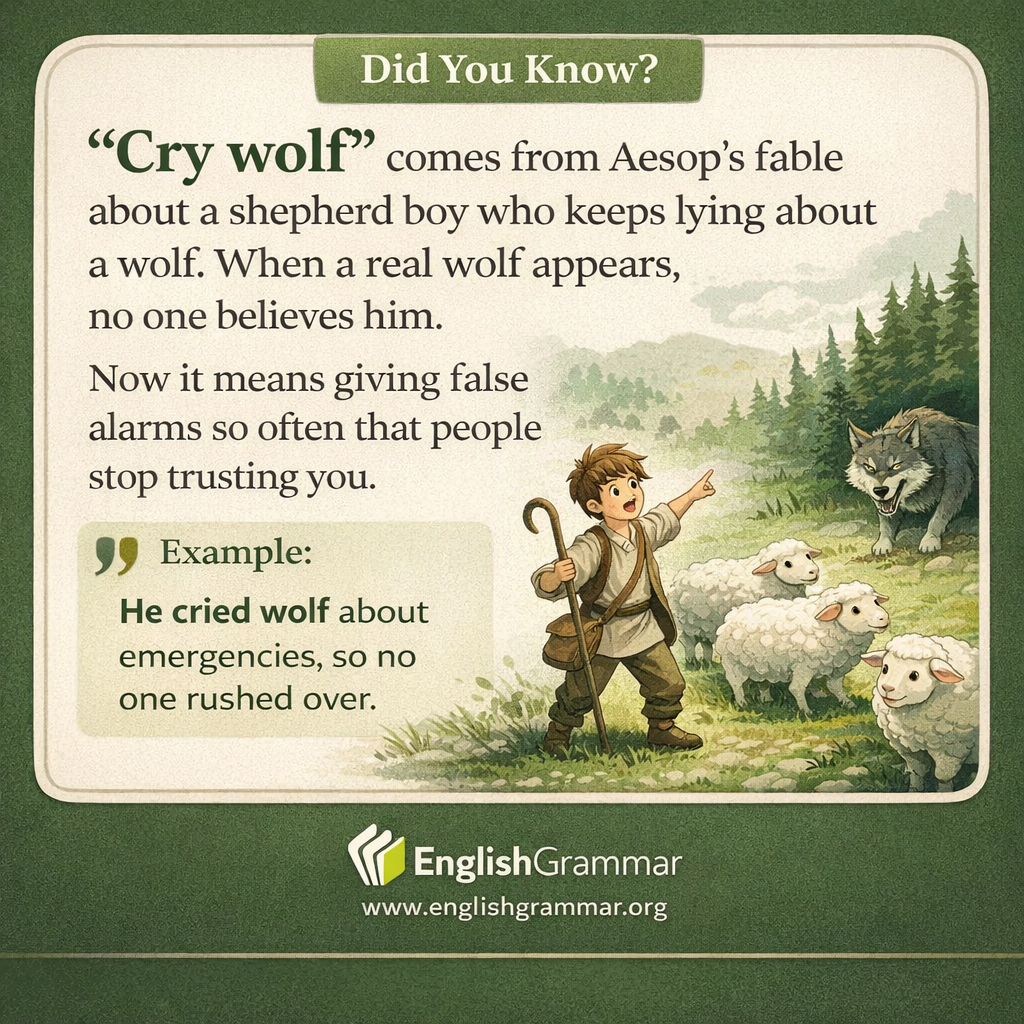
The phrase “cry wolf” comes from a famous fable often linked to Aesop. In the story, a shepherd boy repeatedly shouts that a wolf is attacking the flock, even though there is no danger. People run to help him each time, only to discover that he was lying.
Eventually, a real wolf appears. This time, when the boy calls for help, no one believes him. The lesson is simple: if you lie too often, people may ignore you when you are finally telling the truth.
Today, “cry wolf” means giving false alarms so often that others stop trusting your warnings. It is usually used when someone exaggerates problems, invents emergencies, or repeatedly warns about something that is not really happening.
- At work: If someone keeps saying a small issue is a disaster, coworkers may stop reacting.
- In daily life: If a friend constantly claims every minor problem is an emergency, people may not take the next warning seriously.
So when someone says a person is “crying wolf,” they mean that repeated false warnings have damaged trust.
