
• Skip to primary navigation
  • Skip to main content
  • Skip to primary sidebar
Home of English Grammar
  • Home
  • Course
  • Exercises
  • Grammar Rules
  • Matches
  • Posts
  • Tools
    • Grammar Checker
    • Very Replacer
    • Word Counter
  • Vocabulary Lists
  • Archives
    • Social Media Posts
    • Writing Guides
  • Sign in
  • Join free

What “cut to the chase” means, and where it came from

May 21, 2026

The origin of "cut to the chase"

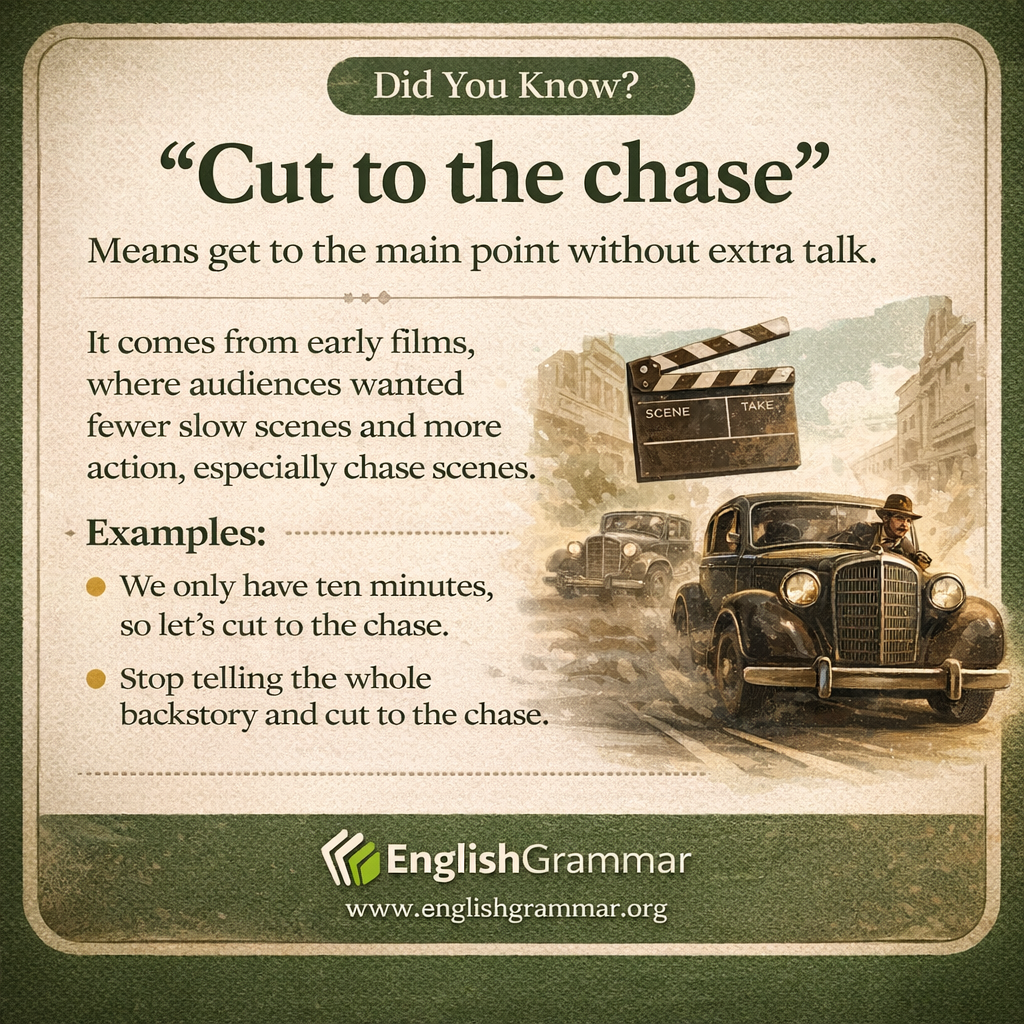
Cut to the chase means to get to the main point without spending too much time on background details or unnecessary talk. People use it when they want someone to be direct and say what really matters first.

The expression is linked to early motion pictures. Many silent films included long dramatic or romantic scenes before the exciting action arrived. Viewers often cared most about the chase scenes, so the idea of cutting to that part became a natural way to mean skipping ahead to the important or exciting point.

Today, the phrase is common in everyday conversation, especially in meetings, explanations, and storytelling.

  • “We’re short on time, so please cut to the chase.”
  • “He cut to the chase and told us the final decision first.”

It usually sounds informal. It can be useful when you want efficiency, but it may sound impatient if the other person feels their background information matters. A close plain English equivalent is get to the point.

Improve your English grammar, vocabulary and writing

We take you step by step from beginner to advanced, even if you struggled with English at school or have always had trouble remembering the rules.

  • 10 modules, 112 lessons and 730 questions
  • Just log in and learn anytime and anywhere
  • Your progress is saved in your account
  • Download the 2027 Grammar Guide (PDF)
Join free

Already have an account? Sign in

See what’s in the course

Primary Sidebar

2.4M760.9K165.9K

Free 2027 Grammar Guide

  • Download Grammar Guide (PDF)
  • Online grammar course, A1 to C2
  • Weekly exercises and vocabulary
  • Join over 3 million English learners

We respect your privacy. Unsubscribe anytime.

Already have an account? Sign in

Grammar Checker - Try Now

Latest Posts

  • The origin of “out of left field” November 2, 2026
  • Creepy, spooky, eerie, sinister, macabre, and bloodcurdling: What’s the difference? November 2, 2026
  • 100 Best Synonyms for “Improvement” November 2, 2026
  • 100 Best Synonyms for “Understood” November 2, 2026
  • Perspicacious vs. perspicuous: understanding the difference November 2, 2026
  • 100 Best Synonyms for “Resent” November 2, 2026
  • 100 Best Synonyms for “Heavenly” November 2, 2026
  • 100 Best Synonyms for “Underpinned” November 2, 2026
  • 100 Best Synonyms for “Improved” November 2, 2026
  • 100 Best Synonyms for “Redeem” November 2, 2026
Home of English Grammar

Free English grammar exercises, rules and vocabulary lists, with new exercises every week. Join the leading English grammar site with over 3 million followers.

Join free

Learn

  • Exercises
  • Matches
  • Grammar rules
  • Vocabulary lists
  • Writing guides
  • Online tools

More

  • Top social media posts
  • Various posts
  • Contact

Account

  • Join free
  • Grammar Course
  • Free grammar guide (PDF)

Copyright © 2026 EnglishGrammar.org

  • Disclaimer
  • Privacy policy
  • Terms
  • Sitemap