
Hypothesis and theory are often confused, especially in everyday speech. In science, they are not the same.
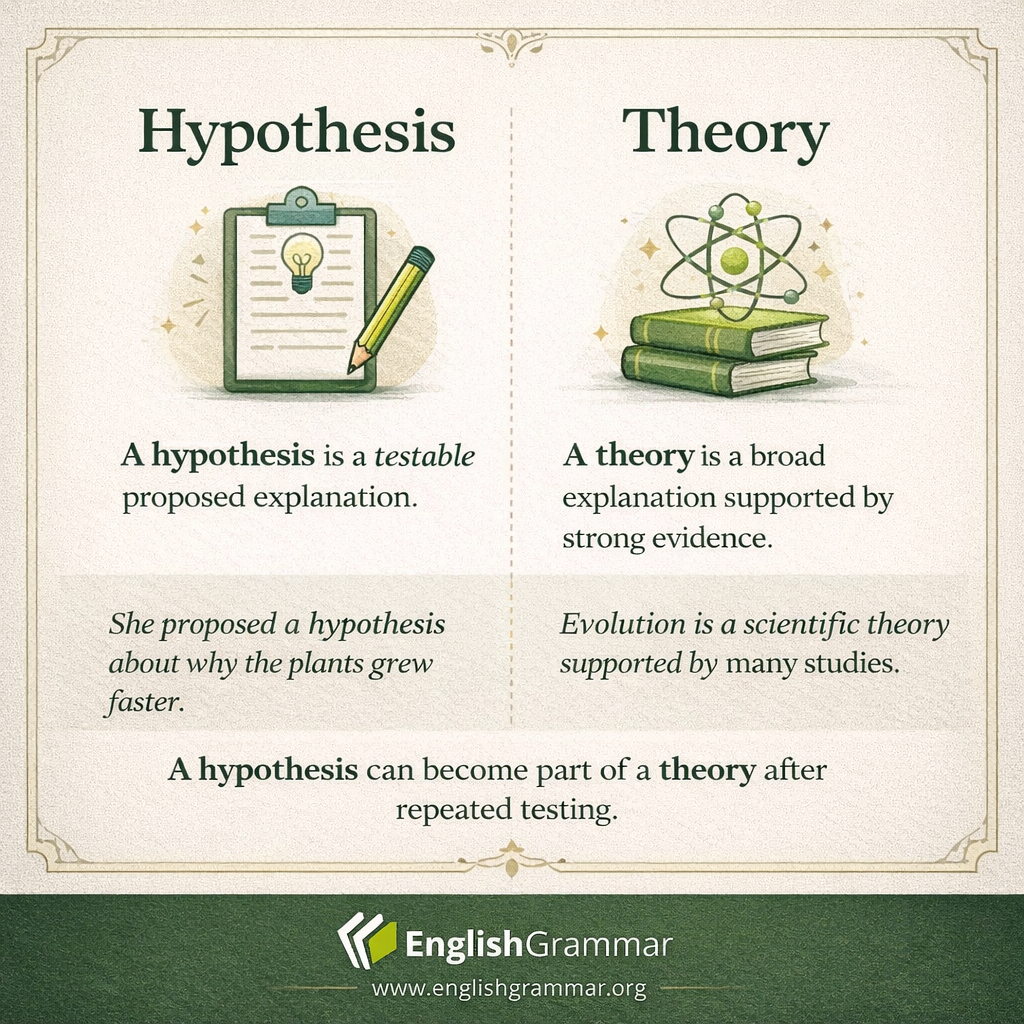
A hypothesis is a specific, testable proposed explanation. It is a starting point for investigation. For example, a researcher might say, If plants get more sunlight, they will grow faster. That claim can be tested with an experiment.
A theory is much broader. It is an explanation that has been supported by a large body of evidence, repeated testing, and consistent results. A theory does not mean a mere guess. In science, it means a strong explanatory framework.
- Hypothesis: a claim you can test
- Theory: an explanation supported by many tested findings
For instance, one experiment might test a hypothesis about plant growth. By contrast, evolution is a scientific theory because it is supported by extensive evidence from genetics, fossils, and observation.
A simple way to remember it is this: a hypothesis is a proposed explanation to examine, while a theory is an explanation that has already earned strong support.
