
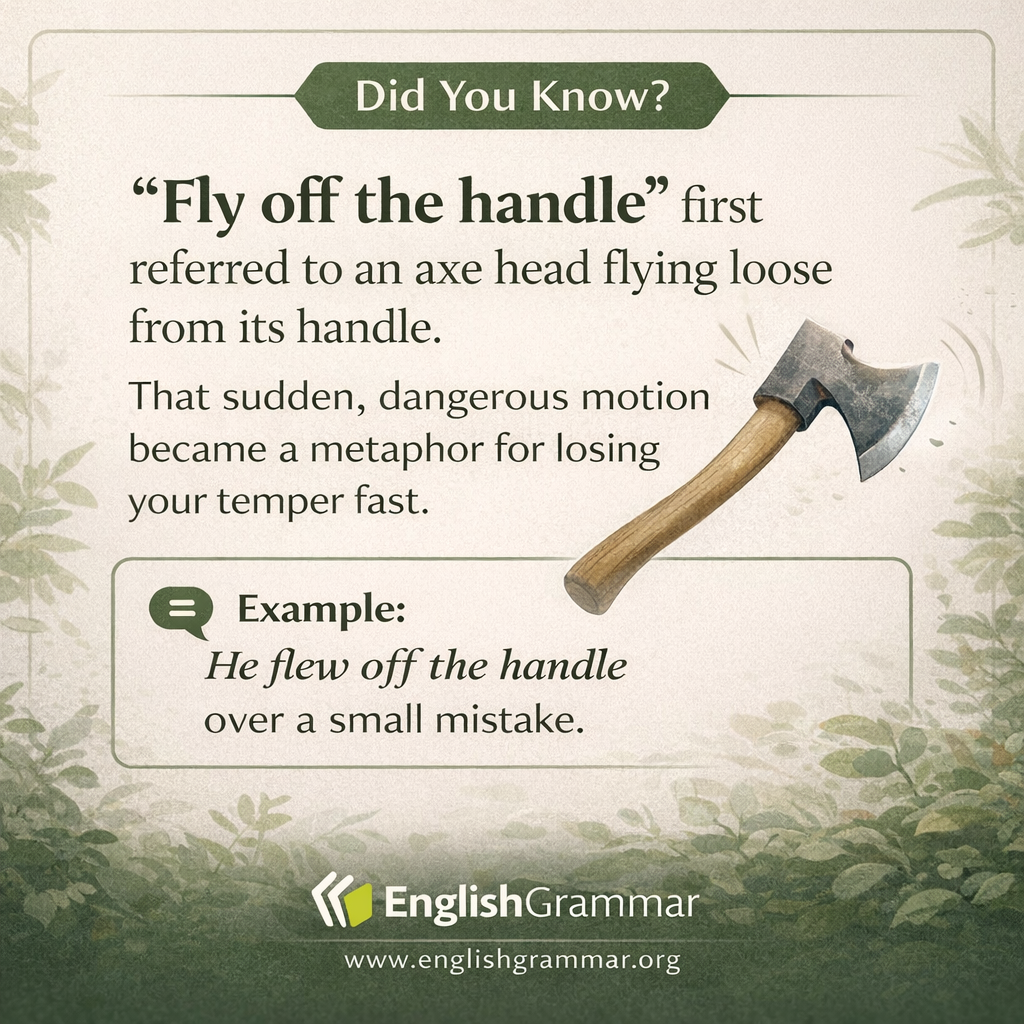
The idiom “fly off the handle” originally came from a very literal and dangerous problem: an axe head could loosen and fly off its wooden handle during use. If that happened, it would shoot away suddenly and unpredictably.
That image helped the phrase develop a figurative meaning. Today, when someone flies off the handle, they lose their temper quickly and explosively. The idea is not just anger, but anger that seems to burst out without much control.
Example: He flew off the handle when he saw the broken window. In this sentence, the person does not just get annoyed. He becomes angry very fast.
This idiom is useful because the old physical image still matches the modern meaning:
- Suddenness: the reaction happens fast
- Force: the anger feels intense
- Loss of control: the response seems hard to stop
So even though most speakers are thinking about temper, the phrase still carries its older picture of something dangerous breaking loose.
