Home of English Grammar

Grammar Guide
  • Home
  • Exercises
  • Matches
  • Rules
  • Tools
    • Grammar Checker
    • Very Replacer
    • Word Counter
  • Top Social Media Posts
  • Various Posts
  • Vocabulary
  • Writing Guides
  • Contact

How pajamas entered English from Hindi and Urdu

May 12, 2026 - pdf

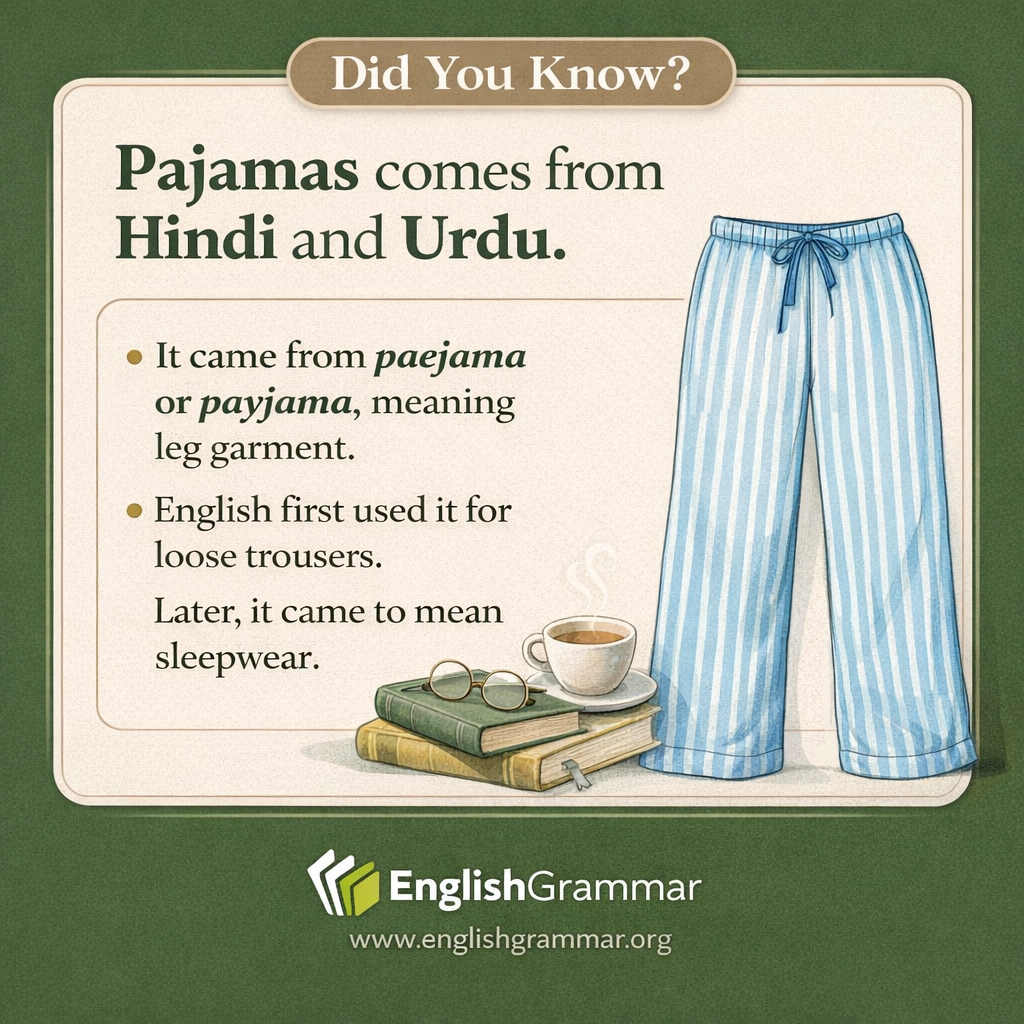
Pajamas comes from Hindi/Urdu

Pajamas is a loanword that entered English from Hindi and Urdu. It comes from forms such as paejama or payjama, which meant a leg garment or loose trousers tied at the waist.

When English speakers first borrowed the word, they used it mainly for the trousers themselves, not for a full set of clothes for sleeping. Over time, the meaning widened. In modern English, pajamas usually means sleepwear, often a matching top and bottoms.

This kind of change is common in language. A borrowed word can keep part of its original meaning, then develop a new everyday use in the receiving language.

  • Earlier sense: loose trousers
  • Common modern sense: clothes worn to sleep
  • Example: He changed into his pajamas before bed.

British English often spells the word pyjamas, while American English usually prefers pajamas. The spelling differs, but the history is the same.

  • Share
  • Post
  • Post
  • Email
NEW: Try Matches, our daily vocabulary challenge. Pick a topic and level and match words with definitions to boost your vocabulary.
2,485,429 
761,532 
Improve Your Grammar
  • Download 2026 Grammar Guide (PDF)
  • Free Weekly Exercises & Vocabulary
  • Join over 3 Million English Learners
We respect your privacy. Unsubscribe anytime.

Grammar Checker

GrammarCheck.net - Try online
Hint → Bookmark GrammarCheck for future use.

Latest Posts

  • How pajamas entered English from Hindi and Urdu May 12, 2026
  • 100 Best Synonyms for “Buttery” May 11, 2026
  • 100 Words Every Apartment Resident Should Know May 11, 2026
  • 100 Best Synonyms for “Tactful” May 11, 2026
  • Fronting and Inversion Exercise May 11, 2026
  • 100 Email Subject Lines for Rescheduling Messages May 11, 2026
  • Why “meet your Waterloo” means a final defeat May 11, 2026

Copyright © 2026 · EnglishGrammar.org
Disclaimer · Privacy Policy · Sitemap · Terms

Improve Your Grammar
  • Download 2026 Grammar Guide (PDF)
  • Free Weekly Exercises & Vocabulary
  • Join over 3 Million English Learners
We respect your privacy. Unsubscribe anytime.