
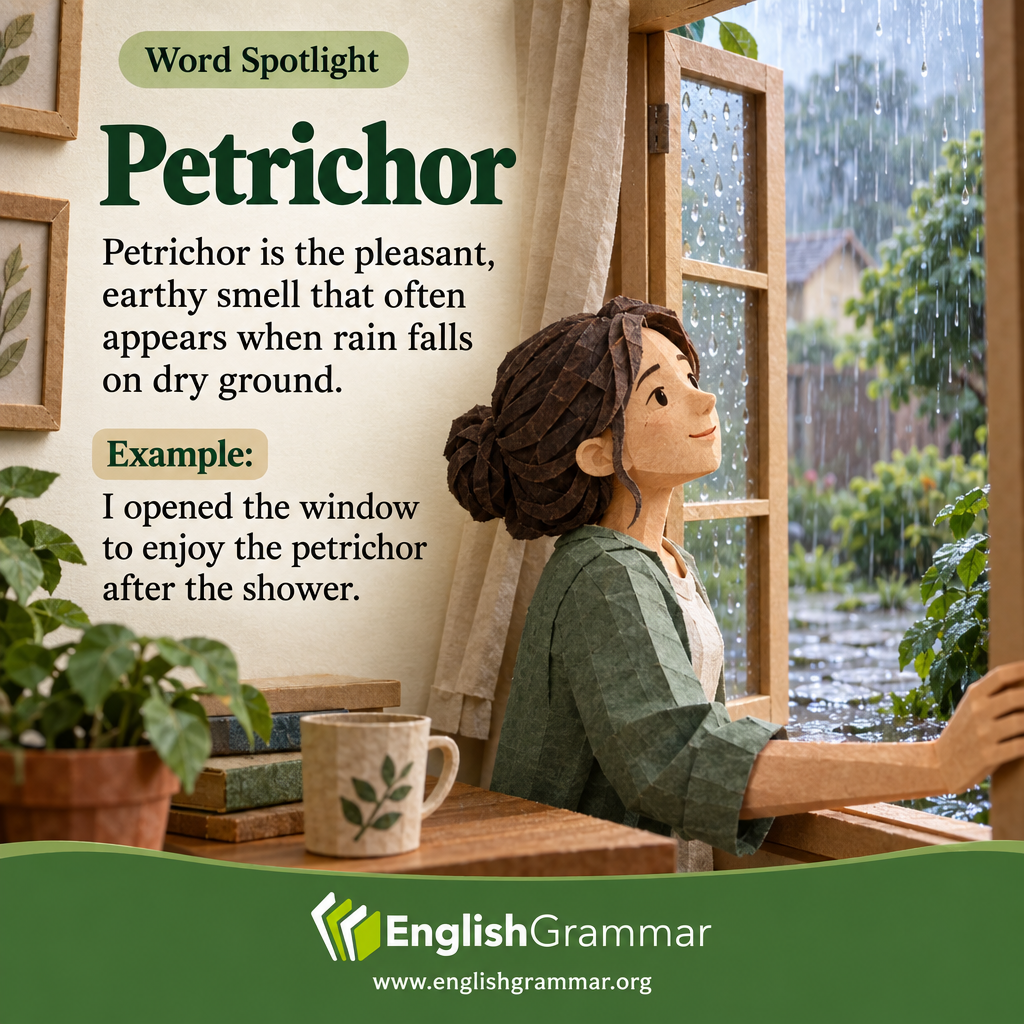
You step outside after a shower, and the air has a fresh, earthy smell. There is a word for that familiar scent: petrichor. It means the pleasant smell that often appears when rain falls on dry ground.
The detail about dry ground matters. Petrichor does not mean every smell you notice during wet weather. It names a particular earthy scent associated with rain, especially rain following a dry period. You might notice it in a garden, on a walking path, or near a patch of bare soil.
How do you use it? Petrichor is a noun: it names something you can smell. It is usually used without a or a plural ending, much like fresh air. A natural example is: “The first shower after weeks of dry weather filled the garden with petrichor.”
- In descriptive writing: Use petrichor when you want to name the scent precisely.
- In everyday conversation: “The earthy smell after rain” is a clear alternative if your listener does not know the word.
Petrichor can sound literary or scientific, but it is not limited to either setting. It works in a personal story, a weather observation, or a description of a place. If you use it with English learners, a short explanation helps: “I love petrichor—that earthy smell when rain hits dry ground.”
