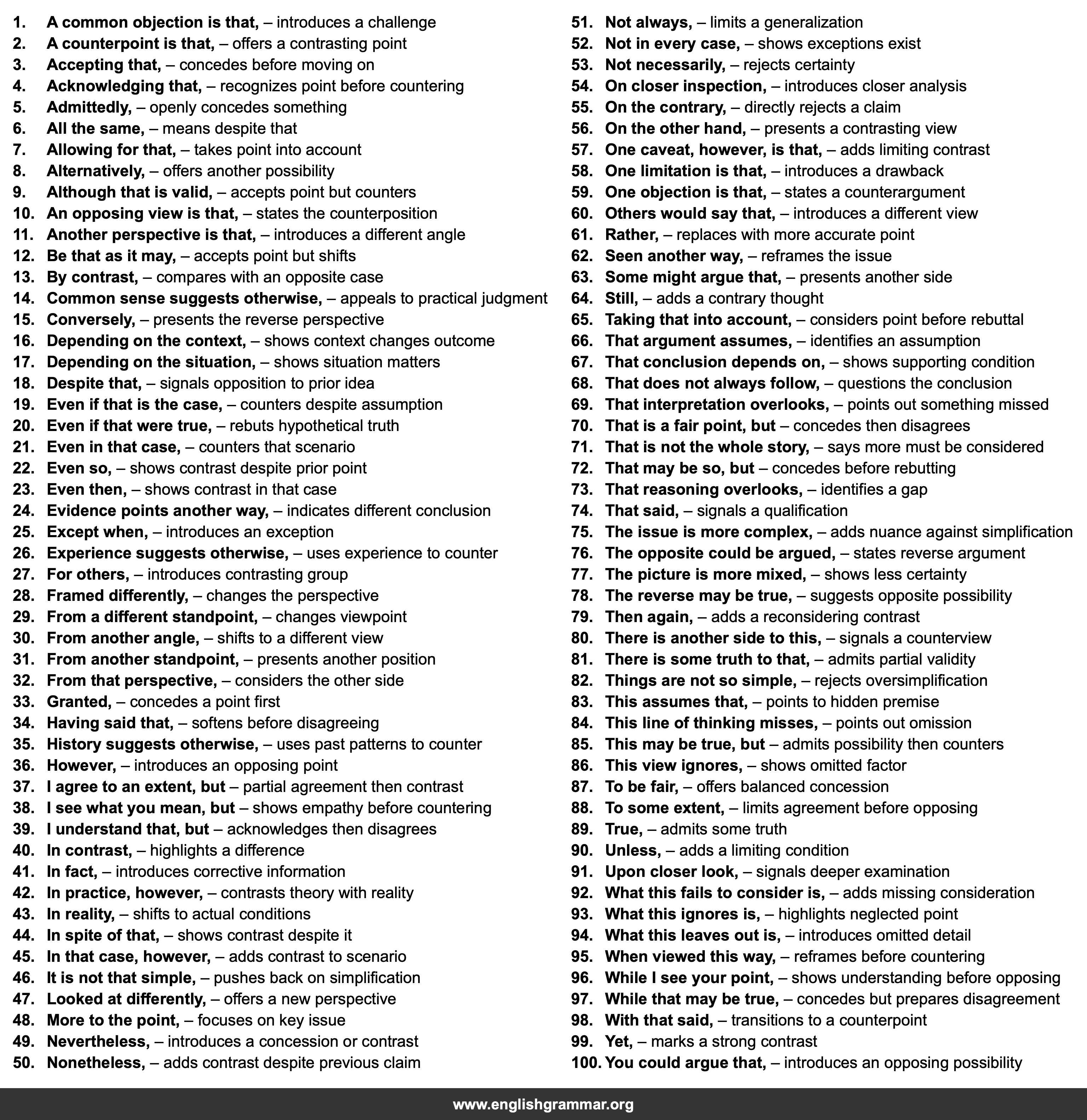
| No. | Item | Definition |
|---|---|---|
| 1. | A common objection is that, | introduces a challenge |
| 2. | A counterpoint is that, | offers a contrasting point |
| 3. | Accepting that, | concedes before moving on |
| 4. | Acknowledging that, | recognizes point before countering |
| 5. | Admittedly, | openly concedes something |
| 6. | All the same, | means despite that |
| 7. | Allowing for that, | takes point into account |
| 8. | Alternatively, | offers another possibility |
| 9. | Although that is valid, | accepts point but counters |
| 10. | An opposing view is that, | states the counterposition |
| 11. | Another perspective is that, | introduces a different angle |
| 12. | Be that as it may, | accepts point but shifts |
| 13. | By contrast, | compares with an opposite case |
| 14. | Common sense suggests otherwise, | appeals to practical judgment |
| 15. | Conversely, | presents the reverse perspective |
| 16. | Depending on the context, | shows context changes outcome |
| 17. | Depending on the situation, | shows situation matters |
| 18. | Despite that, | signals opposition to prior idea |
| 19. | Even if that is the case, | counters despite assumption |
| 20. | Even if that were true, | rebuts hypothetical truth |
| 21. | Even in that case, | counters that scenario |
| 22. | Even so, | shows contrast despite prior point |
| 23. | Even then, | shows contrast in that case |
| 24. | Evidence points another way, | indicates different conclusion |
| 25. | Except when, | introduces an exception |
| 26. | Experience suggests otherwise, | uses experience to counter |
| 27. | For others, | introduces contrasting group |
| 28. | Framed differently, | changes the perspective |
| 29. | From a different standpoint, | changes viewpoint |
| 30. | From another angle, | shifts to a different view |
| 31. | From another standpoint, | presents another position |
| 32. | From that perspective, | considers the other side |
| 33. | Granted, | concedes a point first |
| 34. | Having said that, | softens before disagreeing |
| 35. | History suggests otherwise, | uses past patterns to counter |
| 36. | However, | introduces an opposing point |
| 37. | I agree to an extent, but | partial agreement then contrast |
| 38. | I see what you mean, but | shows empathy before countering |
| 39. | I understand that, but | acknowledges then disagrees |
| 40. | In contrast, | highlights a difference |
| 41. | In fact, | introduces corrective information |
| 42. | In practice, however, | contrasts theory with reality |
| 43. | In reality, | shifts to actual conditions |
| 44. | In spite of that, | shows contrast despite it |
| 45. | In that case, however, | adds contrast to scenario |
| 46. | It is not that simple, | pushes back on simplification |
| 47. | Looked at differently, | offers a new perspective |
| 48. | More to the point, | focuses on key issue |
| 49. | Nevertheless, | introduces a concession or contrast |
| 50. | Nonetheless, | adds contrast despite previous claim |
| 51. | Not always, | limits a generalization |
| 52. | Not in every case, | shows exceptions exist |
| 53. | Not necessarily, | rejects certainty |
| 54. | On closer inspection, | introduces closer analysis |
| 55. | On the contrary, | directly rejects a claim |
| 56. | On the other hand, | presents a contrasting view |
| 57. | One caveat, however, is that, | adds limiting contrast |
| 58. | One limitation is that, | introduces a drawback |
| 59. | One objection is that, | states a counterargument |
| 60. | Others would say that, | introduces a different view |
| 61. | Rather, | replaces with more accurate point |
| 62. | Seen another way, | reframes the issue |
| 63. | Some might argue that, | presents another side |
| 64. | Still, | adds a contrary thought |
| 65. | Taking that into account, | considers point before rebuttal |
| 66. | That argument assumes, | identifies an assumption |
| 67. | That conclusion depends on, | shows supporting condition |
| 68. | That does not always follow, | questions the conclusion |
| 69. | That interpretation overlooks, | points out something missed |
| 70. | That is a fair point, but | concedes then disagrees |
| 71. | That is not the whole story, | says more must be considered |
| 72. | That may be so, but | concedes before rebutting |
| 73. | That reasoning overlooks, | identifies a gap |
| 74. | That said, | signals a qualification |
| 75. | The issue is more complex, | adds nuance against simplification |
| 76. | The opposite could be argued, | states reverse argument |
| 77. | The picture is more mixed, | shows less certainty |
| 78. | The reverse may be true, | suggests opposite possibility |
| 79. | Then again, | adds a reconsidering contrast |
| 80. | There is another side to this, | signals a counterview |
| 81. | There is some truth to that, | admits partial validity |
| 82. | Things are not so simple, | rejects oversimplification |
| 83. | This assumes that, | points to hidden premise |
| 84. | This line of thinking misses, | points out omission |
| 85. | This may be true, but | admits possibility then counters |
| 86. | This view ignores, | shows omitted factor |
| 87. | To be fair, | offers balanced concession |
| 88. | To some extent, | limits agreement before opposing |
| 89. | True, | admits some truth |
| 90. | Unless, | adds a limiting condition |
| 91. | Upon closer look, | signals deeper examination |
| 92. | What this fails to consider is, | adds missing consideration |
| 93. | What this ignores is, | highlights neglected point |
| 94. | What this leaves out is, | introduces omitted detail |
| 95. | When viewed this way, | reframes before countering |
| 96. | While I see your point, | shows understanding before opposing |
| 97. | While that may be true, | concedes but prepares disagreement |
| 98. | With that said, | transitions to a counterpoint |
| 99. | Yet, | marks a strong contrast |
| 100. | You could argue that, | introduces an opposing possibility |
