
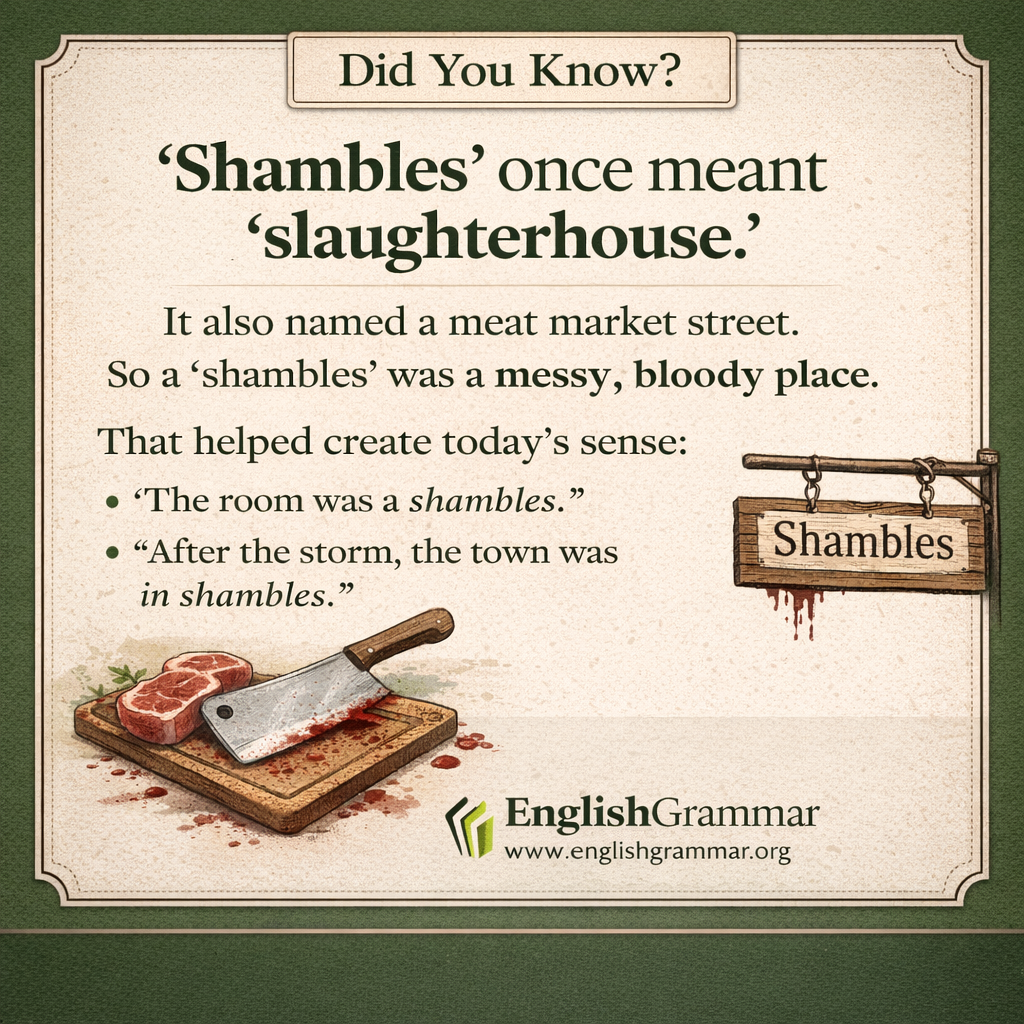
Shambles did not originally mean general disorder. In earlier English, it referred to a slaughterhouse or a place where butchers sold meat. In some towns, a shambles was the meat market street itself.
That older meaning helps explain the modern one. A slaughter area was noisy, crowded, and physically messy, so the word gradually developed the sense of confusion, ruin, or disorder.
- Older sense: The butchers worked in the shambles.
- Street name sense: The Shambles can still be the name of an old market street.
- Modern sense: After the move, the apartment was a shambles.
- Modern sense: The office was in shambles after the leak.
Today, people usually use shambles for a chaotic situation or a badly disordered place. The older meat related meaning is mostly historical now, but it survives in place names and in the word’s vivid background.
