
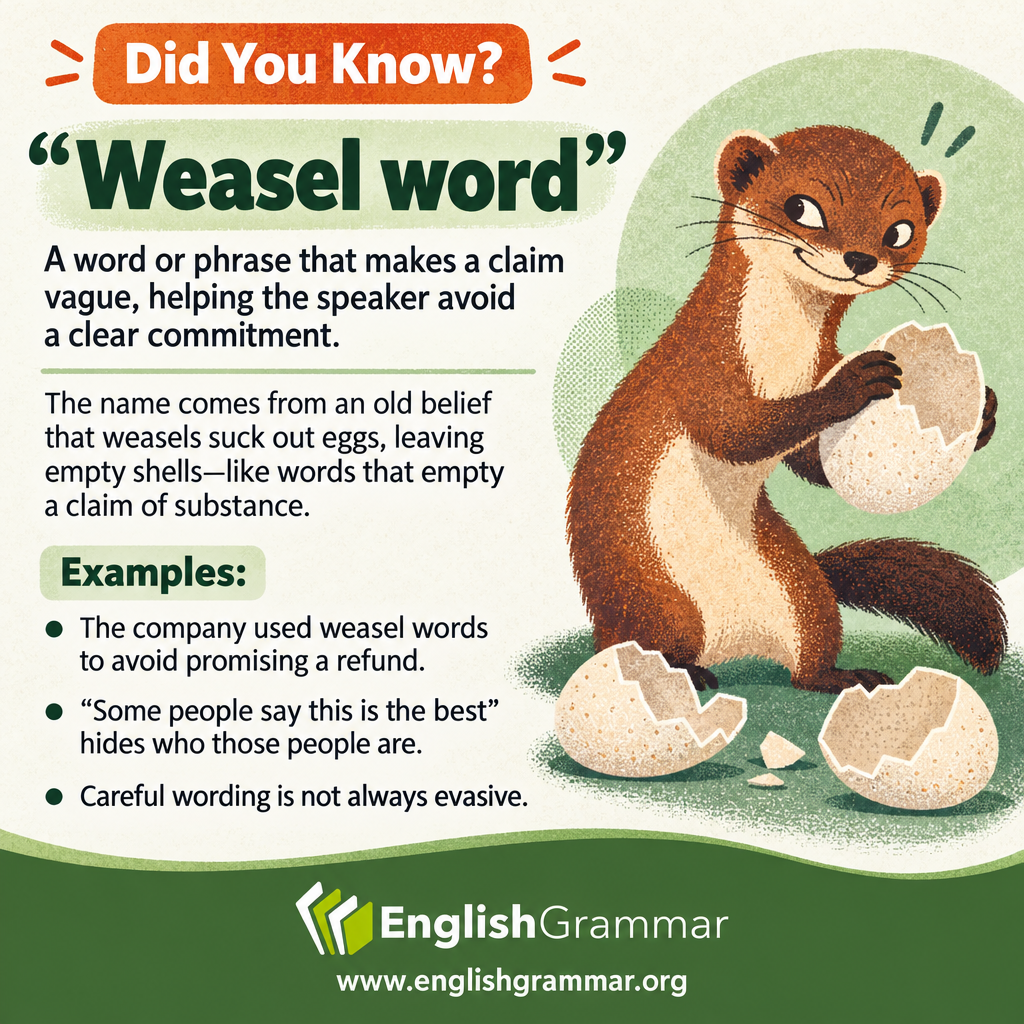
A claim can sound confident while avoiding a clear promise. A weasel word is a word or phrase that makes a statement vague, weakens its force, or helps someone avoid responsibility for it. The expression is usually critical: it suggests that the wording hides something the reader needs to know.
The name draws on an old belief that weasels suck the contents out of eggs, leaving the shells behind. This traditional image—not a scientific explanation of their feeding habits—provides the link: the statement still looks substantial, but some of its meaning has been emptied out.
Here are two common ways this happens:
- Avoiding a firm commitment: “We aim to deliver your order tomorrow.” This states a goal, not a guarantee. It becomes evasive if the seller encourages you to treat it as a promise.
- Hiding the source: “It is widely believed that this drink improves memory.” Who believes it, and what evidence supports the claim? The sentence does not tell us.
Context matters. Words such as may, some, and usually are not automatically misleading. They often express real uncertainty or necessary limits. “This medicine may cause dizziness,” for example, gives a useful warning without claiming that everyone will experience it.
When evaluating a statement, ask what it actually commits to, who supports it, and whether its limits are made clear.