
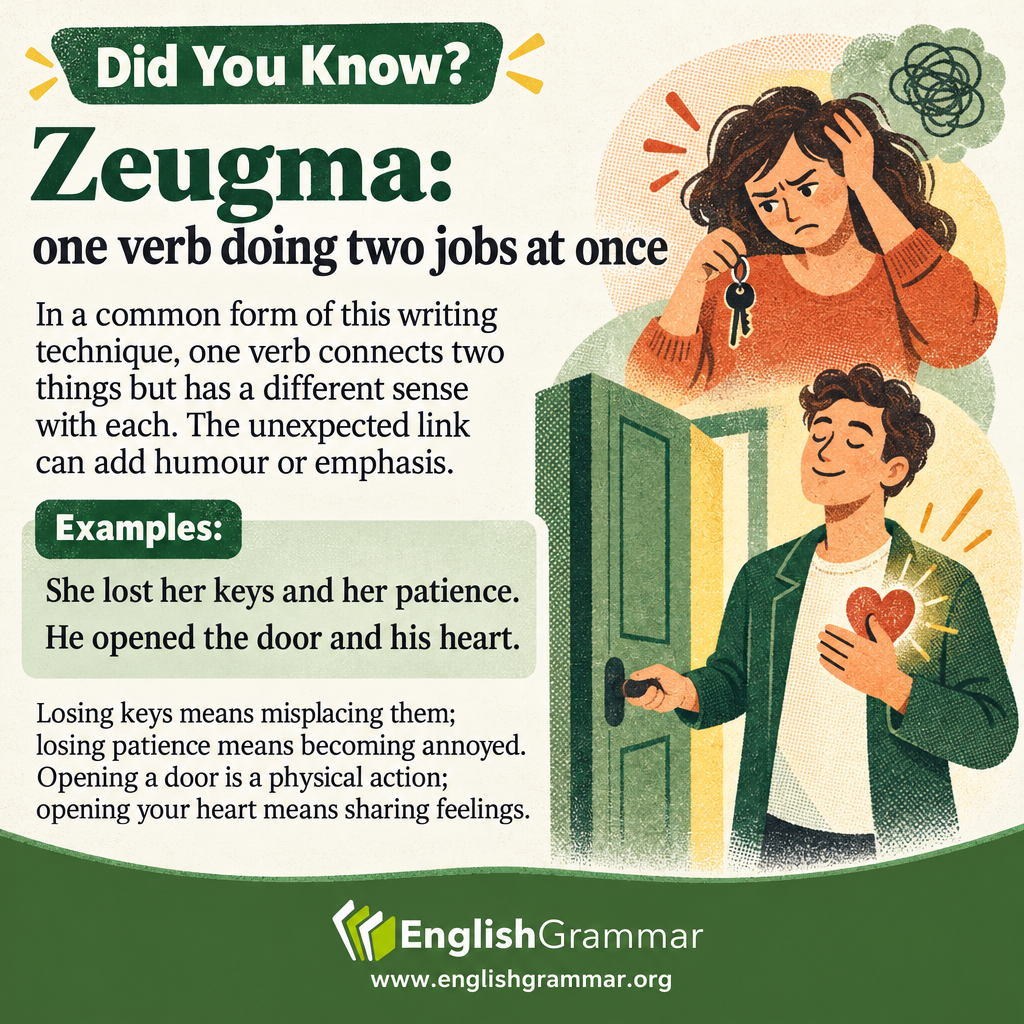
A single verb can sometimes do two different jobs in the same sentence. This technique is called zeugma. In a common form, the verb connects two words or phrases but has a different sense with each one. The unexpected connection can create humour or make an idea more memorable.
The name comes from a Greek word meaning yoking or joining: one word joins parts of a sentence together.
- She caught the bus and a cold. To catch the bus means to reach it in time and get on. To catch a cold means to become ill. The shared verb links two quite different experiences.
- He broke a glass and the silence. Breaking a glass means damaging a physical object. Breaking the silence means making a sound after a quiet period.
Simply putting two objects after a verb does not necessarily create this effect. In She carried a bag and an umbrella, the verb has the same ordinary meaning with both objects. There is no surprising shift in sense.
Definitions vary: some references use zeugma more broadly for a word shared by different parts of a sentence, and some call the meaning-shifting kind syllepsis.
When writing your own example, check that each verb-and-object combination makes sense separately. Then consider whether joining them creates a useful surprise. The technique often suits jokes, stories, and headlines better than instructions, where clarity matters most.