
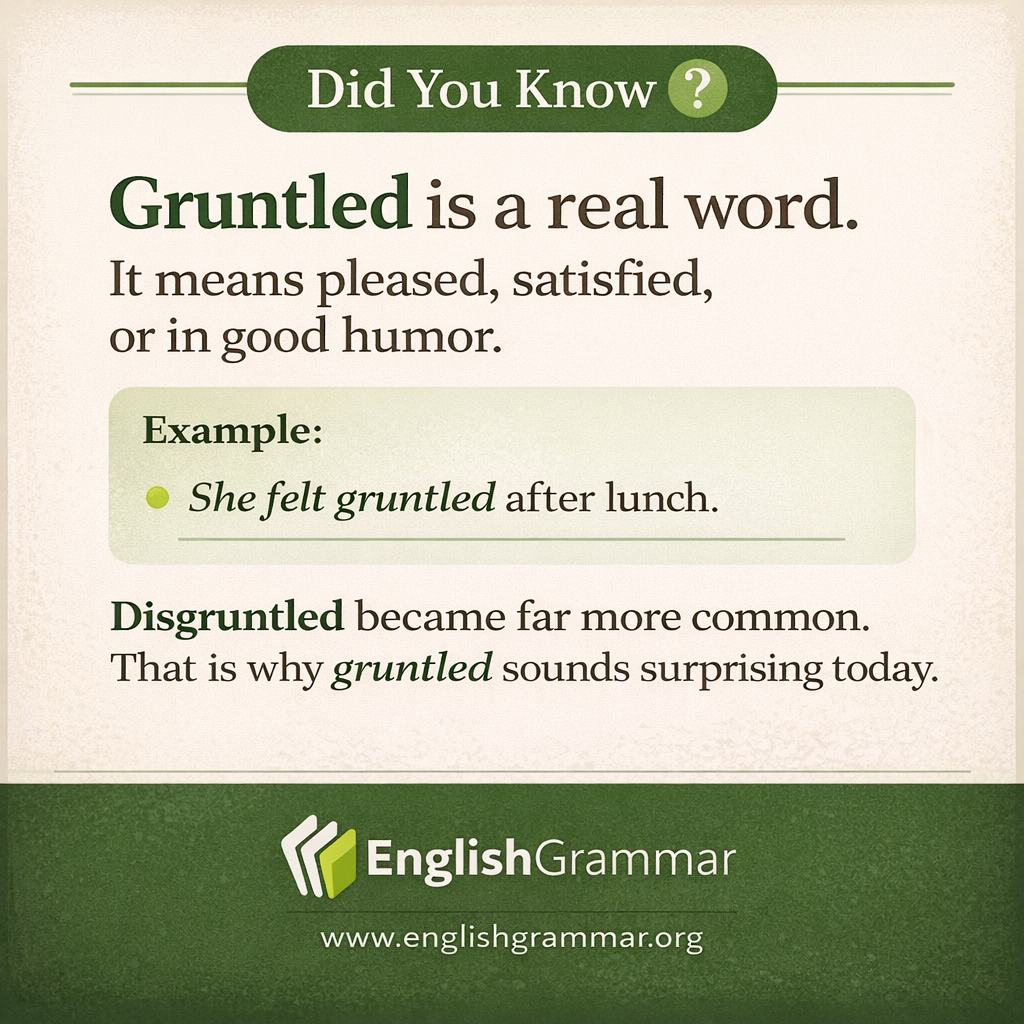
Gruntled is a real English word. It means pleased, satisfied, or in good humor. Many people assume it was invented later by removing the prefix from disgruntled, but gruntled does exist in standard dictionaries.
So why does it sound strange? The short answer is frequency. Disgruntled, meaning annoyed or dissatisfied, became much more common in everyday use. As a result, many speakers know the negative form but rarely see the positive one.
- Gruntled: satisfied or cheerful. Example: After a good meal, he looked quite gruntled.
- Disgruntled: dissatisfied or irritated. Example: The disgruntled customer asked to speak to the manager.
This makes gruntled feel surprising, but it is still a legitimate word. In modern writing, it often appears with a playful tone because readers are so used to disgruntled. Still, the meaning is clear: if someone is gruntled, they are content rather than annoyed.
