
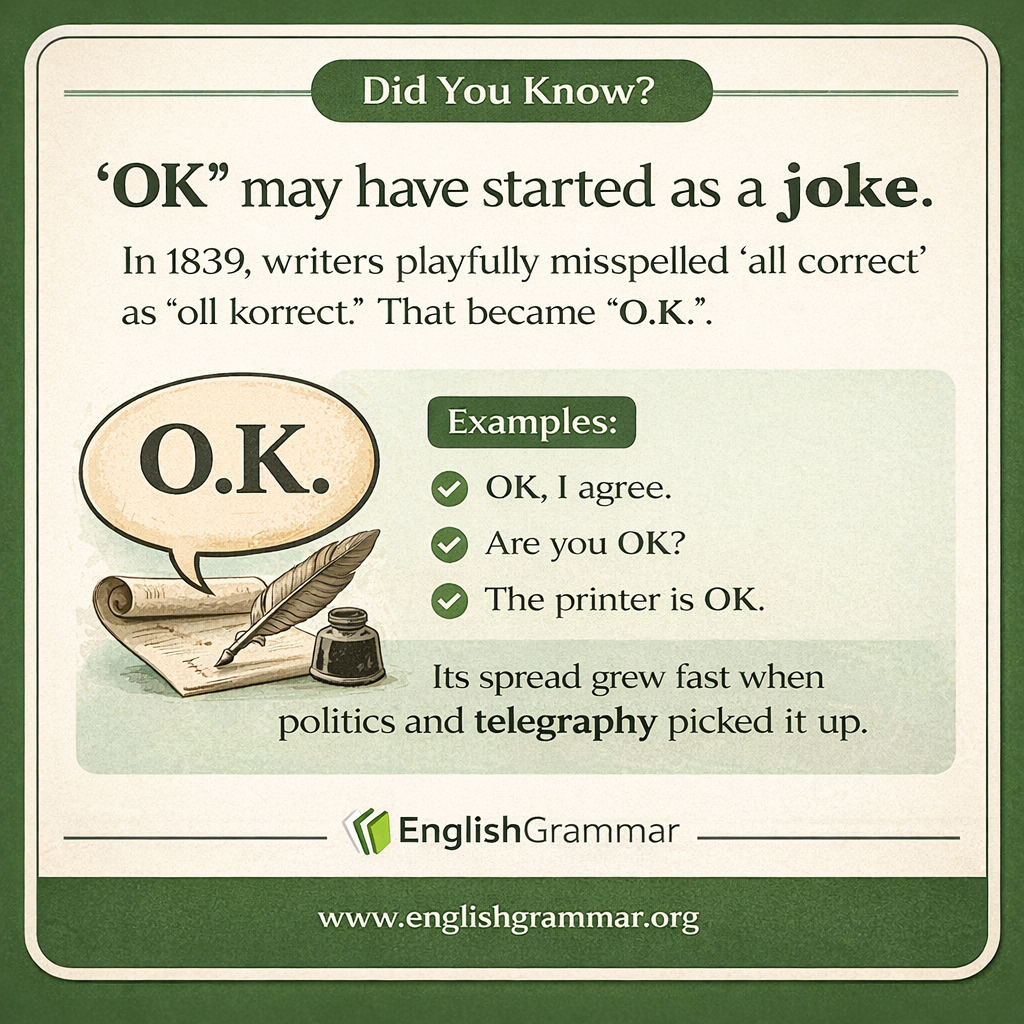
OK is one of the most recognized words in the world, and it may have begun as a joke. In Boston in 1839, a newspaper used O.K. as an abbreviation for oll korrect, a humorous misspelling of all correct. At the time, playful abbreviations were fashionable, and this one survived.
Its rise was helped by public life. In 1840, supporters of U.S. president Martin Van Buren used OK in campaign slogans because he was known as Old Kinderhook. Later, telegraph operators also found OK useful because it was short, clear, and easy to send.
Today, OK has several common uses:
- Agreement: “OK, let’s start.”
- Checking condition: “Are you OK?”
- Saying something is acceptable: “The food was OK.”
- Confirming completion: “Everything is OK now.”
So the exact origin story has some debate, but the 1839 oll korrect explanation is the most famous and best supported. A small joke became a global everyday word.
