
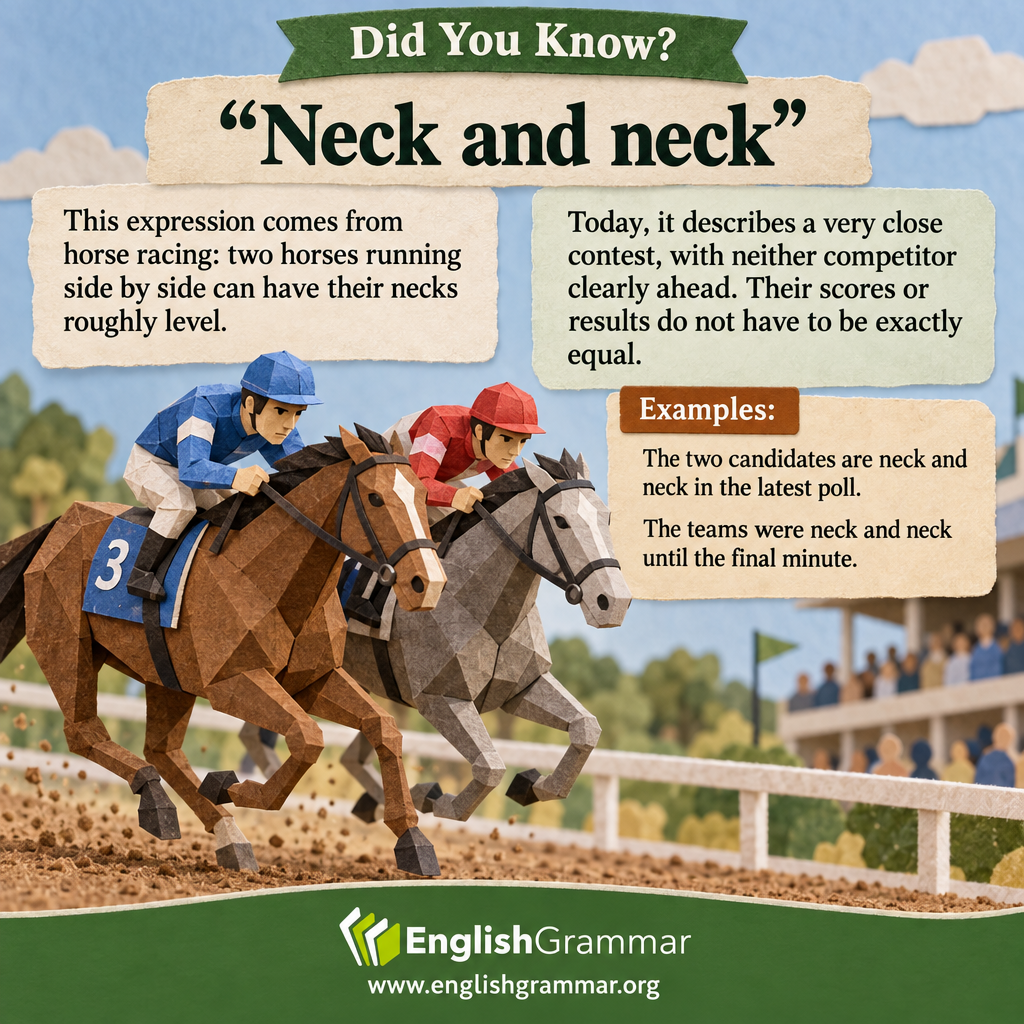
The expression comes from horse racing. When two horses run side by side, their necks can be roughly level. That picture of a very close race gave English a way to describe competitors who are almost equal, with neither clearly ahead.
Today, the expression is used far beyond the racetrack. It can describe sports teams, election candidates, businesses, or people competing for a prize. The important idea is that the contest is close and the result is still uncertain.
Examples:
- The two runners were neck and neck as they approached the finish line.
- The rival shops are neck and neck in this month’s sales figures.
- With one round left, Maya and Ben are neck and neck in the quiz.
The competitors do not need to have exactly the same score or result. A small difference can still leave them close enough for the expression to fit. However, it would not normally describe a contest in which one competitor has a large, clear lead.
Notice the difference between neck and neck and winning by a neck. The first describes competitors who are very close during a contest. In horse racing, the second describes a narrow winning margin: the distance between the horses at the finish is approximately the length of a horse’s neck. One describes a close contest; the other says who finished ahead and by how much.
