
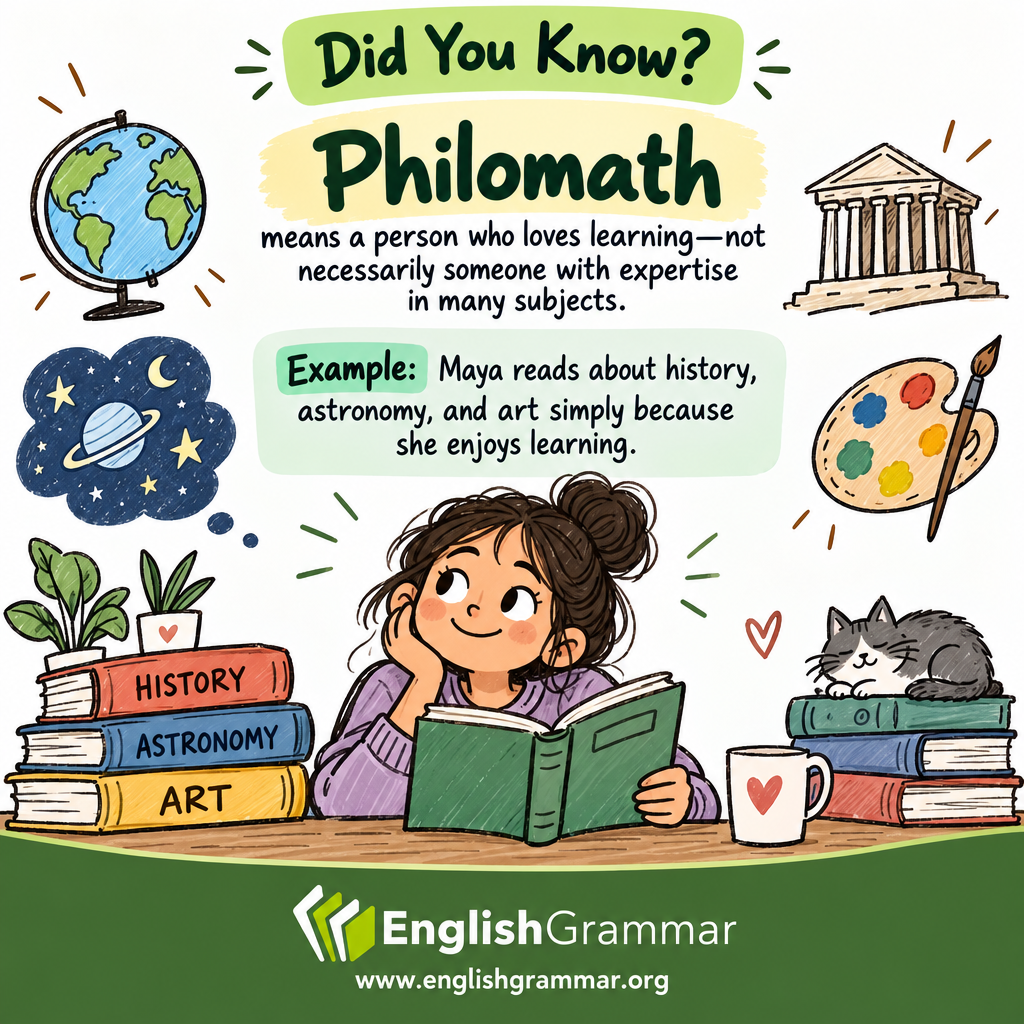
A philomath is a person who loves learning. The word is rooted in Greek elements connected with loving and learning. It can describe someone whose curiosity leads them to read, study, ask questions, or explore new subjects for the pleasure of understanding them.
The key idea is enthusiasm for learning, not a particular level of achievement. A beginner can be a philomath. So can an expert who remains eager to discover more. The word is uncommon in everyday conversation, but its meaning is straightforward once you connect it with a love of learning.
For example: “Nadia is a philomath who spends her weekends learning about birds, architecture, and coding.” Nadia does not have to be an authority on all three subjects. Her active interest in learning is what makes the word fit.
It is useful to contrast philomath with polymath. The words look similar, but their focus differs:
- Philomath: someone who loves learning.
- Polymath: someone with substantial knowledge or skill across many different fields.
A person could be both. Someone may begin as an eager learner and eventually gain broad expertise, but one label does not automatically imply the other. Consider this sentence: “Even after retiring, Mr. Chen remained a philomath, taking classes in music and geology.” Here, the word highlights his continuing curiosity rather than claiming that he has mastered many disciplines.