
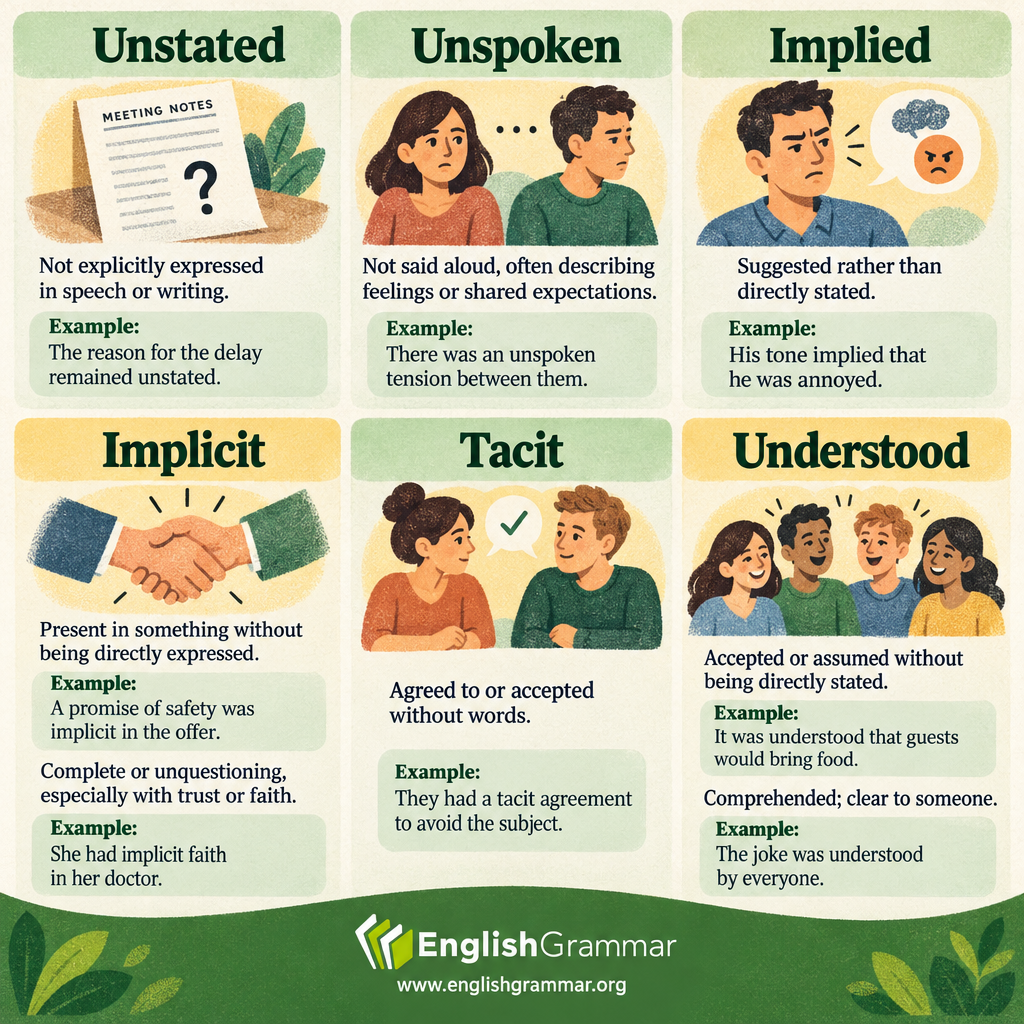
These six words overlap, but they draw attention to different things: missing information, silence, hints, built-in meaning or shared expectations. They are not always interchangeable.
- Unstated simply means not explicitly expressed, whether in speech or writing. The proposal has several unstated assumptions. This does not necessarily mean anyone deliberately hid them.
- Unspoken means not said aloud. It often describes feelings, worries or shared expectations. An unspoken fear kept them awake. Unlike unstated, it often draws attention to someone’s silence.
- Implied means suggested rather than directly stated. Her message implied that we should leave. The wording or situation gives the listener a reason to draw that conclusion, though the speaker may not intend it.
- Implicit often means present in something without being directly expressed. Respect for privacy is implicit in these rules. It overlaps with implied, but often emphasizes what is contained in an idea or arrangement. In phrases such as implicit trust, it means complete or unquestioning.
- Tacit usually describes agreement, approval or acceptance shown without words. They continued with the manager’s tacit approval. Context matters: silence alone does not always establish agreement.
- Understood can mean accepted or assumed without being stated. It was understood that everyone would help clean up. It can also simply mean comprehended: The instructions were easily understood.
Choose according to your focus. An omitted detail may be merely unstated; a suggested conclusion is implied. A shared arrangement might be described as tacit or understood, depending on the context.