
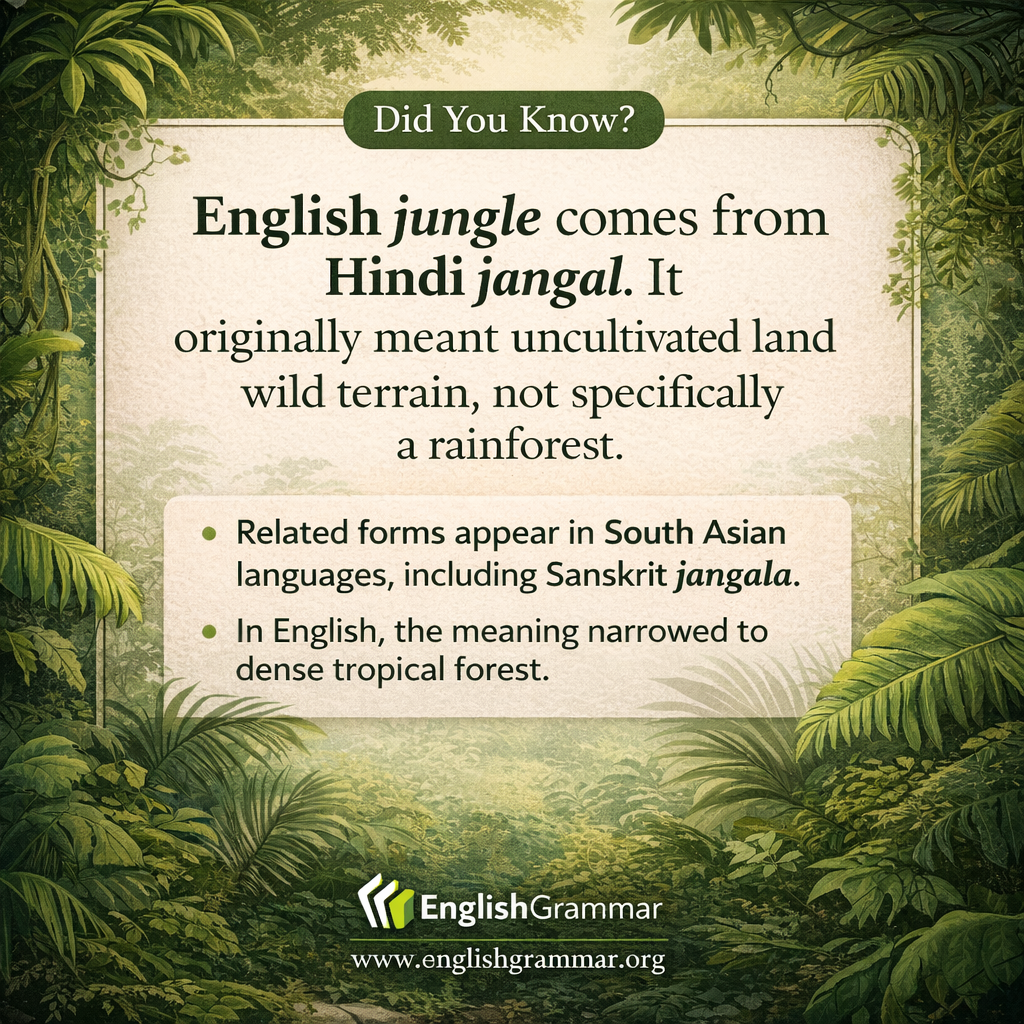
Jungle entered English from Hindi jangal, a word used for wild, uncultivated land. That earlier sense was broader than the way many English speakers use jungle today.
In modern English, jungle usually means dense tropical forest with thick vegetation. But the source word did not only refer to that kind of landscape. It could describe rough, arid, or uncultivated terrain more generally.
The history goes back further still. Related forms are found in other South Asian languages, including Sanskrit jangala. As the word moved into English, its meaning gradually narrowed.
A simple contrast helps:
- Earlier sense: wild or uncultivated land
- Common English sense today: dense tropical forest
So when people picture only vines and rainforests, they are thinking of the later English meaning, not the full older sense behind the word’s South Asian source.
